
In recent years, the landscape of childhood play has been increasingly influenced by digital culture, with toys reflecting adult roles and societal expectations. Traditionally, toys such as doctor kits and kitchens have allowed children to mimic the world around them, fostering imaginative play. However, the recent introduction of a wooden ‘influencer kit’ by Argos has sparked a significant debate about the implications of such products.
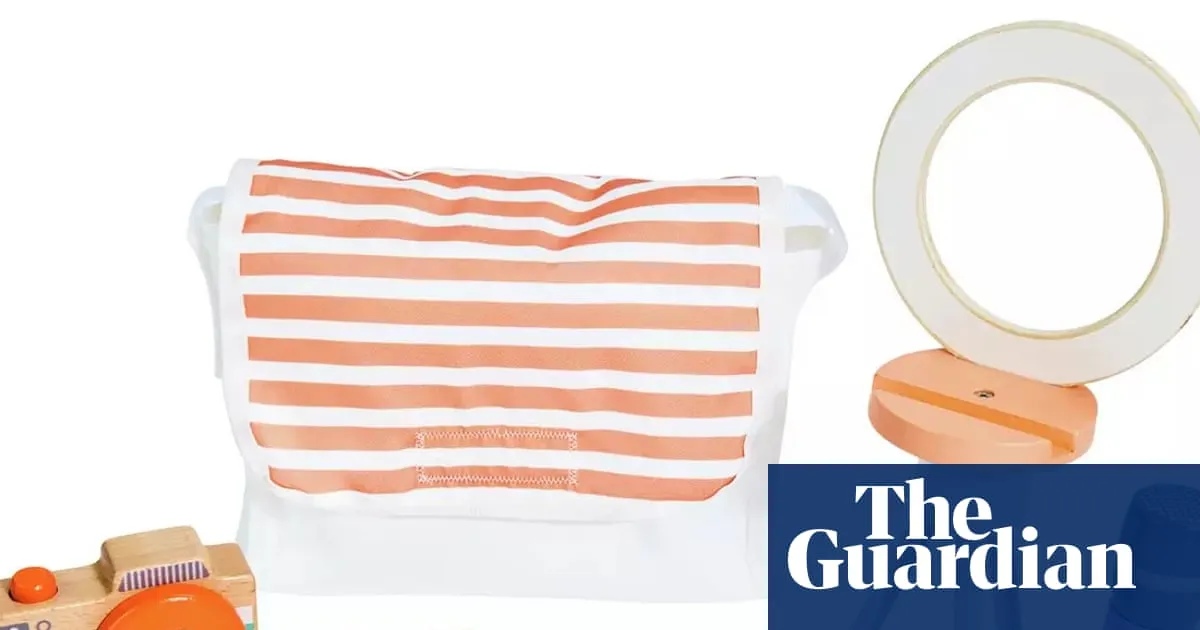
The influencer kit, aimed at toddlers aged two and over, includes a tripod stand, a miniature camera, a smartphone model, a tablet, and a microphone, all for the price of £15. This product marks a decisive moment in the evolution of toys, as it directly connects play with the burgeoning influencer culture that emphasizes visibility, performance, and monetization of everyday life.
Critics, including Daisy Greenwell, co-founder of Smartphone Free Childhood, argue that this toy could normalize digital labor and the pressures of online visibility from a very young age. Greenwell notes, “There’s something a bit off about dressing up a very adult, very performative world as a wholesome wooden toy.” This sentiment reflects a growing concern that children are being conditioned to view themselves as potential content creators rather than simply participants in play.
Dr. Francis Rees, an expert in childhood and digital culture from the University of Essex, adds that toys like the influencer kit suggest that children are not only engaged in play but are also potential objects of attention. He states, “What toys like this normalize is the idea that children are not only participants in play, but also potential objects of attention, as individuals who are watched, followed, and engaged with as ‘content’.”
The implications of this shift are profound. As influencer ranks rise to the top of children’s career aspirations, the question arises: what kinds of risks are we comfortable with taking in the process, and what expectations are we setting for future generations? The toy reflects a cultural moment where digital labor is normalized from an early age, raising ethical concerns about childhood development.
While Argos continues to offer a broad selection of toys that encourage imaginative and creative play, the introduction of the influencer kit has ignited a debate about the appropriateness of such products. Critics warn that this could lead to a generation of children who feel pressured to perform and seek validation through digital platforms.
As the conversation unfolds, it is essential to consider the balance between play and the realities of modern digital culture. The Argos influencer toy debate serves as a critical juncture in understanding how toys can shape children’s perceptions of themselves and their futures.
Details remain unconfirmed.