
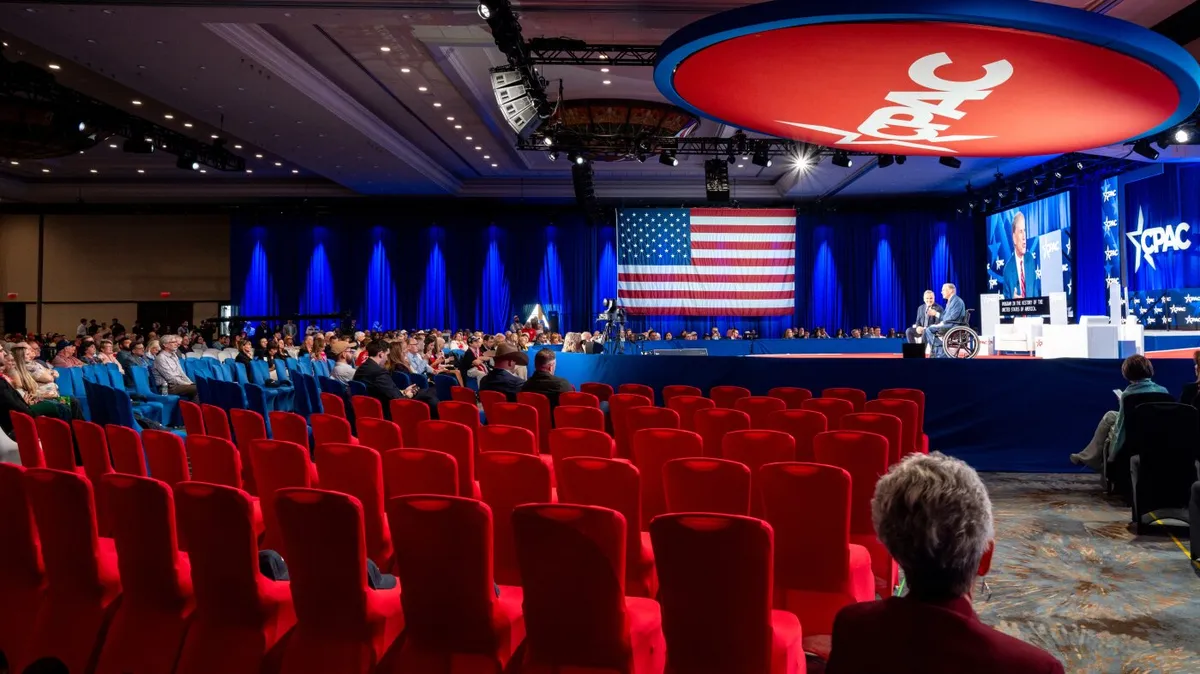
CPAC has long been regarded as a destination for conservative voters to network and organize. The annual conference has historically drawn significant attention from Republican leaders and candidates, serving as a barometer for the party’s direction. However, the 2026 iteration of CPAC, held in Dallas on March 28, marked a notable departure from tradition, particularly with the absence of former President Donald Trump, who missed the event for the first time in a decade.
The backdrop of CPAC 2026 was shaped by the U.S. military’s recent strikes against Iran, which began just one month prior. This conflict has polarized opinions among Republicans, with a Pew Research Center survey revealing that nearly 80% of party members approve of Trump’s handling of the war. Yet, younger Republicans and conservative-leaning independents have shown decreasing support for Trump regarding this issue, indicating a potential shift in the party’s base.
During his speech at CPAC, Congressman Matt Gaetz openly criticized the war in Iran, stating, “A ground invasion of Iran will make our country poorer and less safe.” His remarks resonated with a faction of the audience that feels betrayed by Trump’s promises of no new wars. This sentiment was echoed by attendees like Joseph Bolick, who expressed feelings of betrayal over the military actions.
Despite the absence of Trump, CPAC 2026 featured a lineup of new faces in the conservative movement, reflecting a broader shift in the party’s dynamics. The conference focused heavily on Trump’s key policy priorities, culture war issues, and illegal immigration, but the reduced presence of candidates treating it as a campaign stop compared to previous years was notable.
Polling data indicates that while 74% of Republicans support the strikes on Iran, Trump’s approval rating has plummeted to 36%, its lowest since his return to the White House. This decline in approval reflects the growing divides within Trump’s historically loyal base, particularly among those under 45, who exhibit skepticism towards Israel and the ongoing conflict.
As CPAC 2026 concluded, observers noted the potential for a redefined conservative movement that may not hinge solely on Trump’s leadership. The emergence of new voices and the critical discussions surrounding foreign policy suggest that the Republican Party is at a crossroads, grappling with its identity and future direction.
Looking ahead, the implications of these developments are significant. With the party’s base evolving and internal divisions surfacing, the next steps for Republican leaders will be crucial in shaping the narrative leading into future elections. The landscape of conservative politics is shifting, and how the party responds to these changes will determine its trajectory in the coming years.