
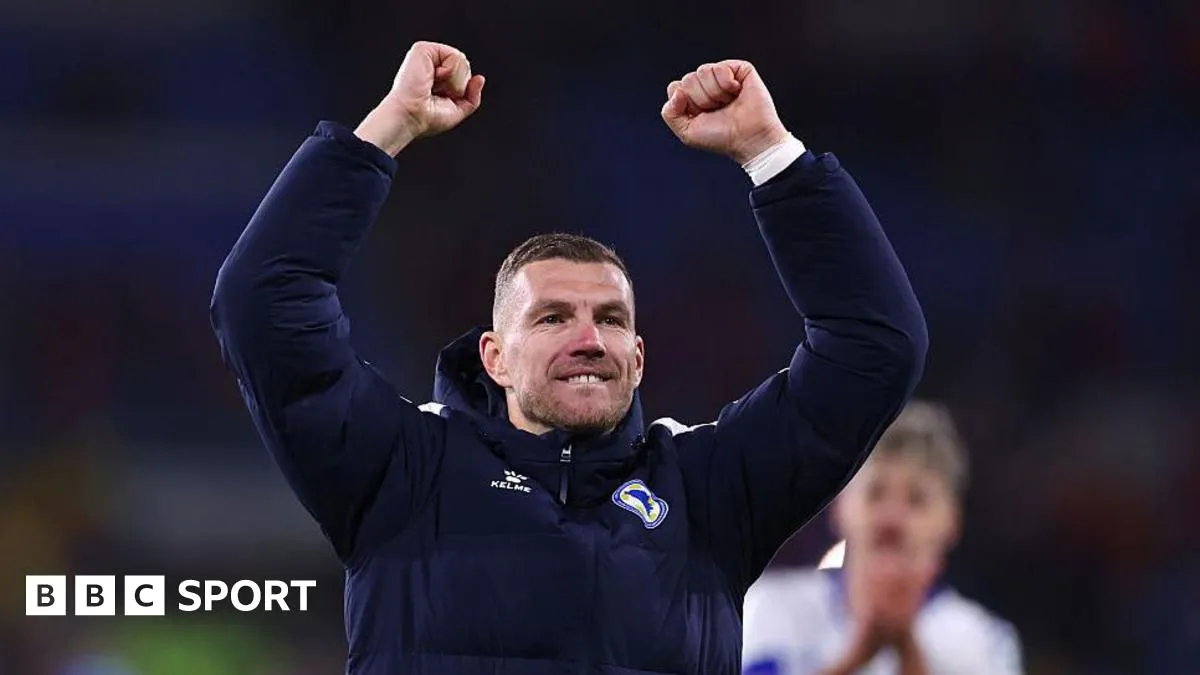
What does it mean for a player to continue competing at the highest level at the age of 40? For Edin Dzeko, it means standing on the precipice of World Cup history. The veteran striker recently played a pivotal role in Bosnia-Herzegovina’s victory over Wales in the World Cup qualifying play-offs semi-final, scoring a late equaliser that propelled his team into a penalty shootout, which they ultimately won. This remarkable performance not only highlights Dzeko’s enduring talent but also places him just one victory away from joining an exclusive club of players aged 40 or over who have participated in a World Cup.
As of now, only one outfield player has ever played in a World Cup at the age of 40 or older: Roger Milla, who famously graced the 1994 USA World Cup at the age of 42 years and 35 days. Dzeko, who turned 40 in March 2023, is now on the cusp of achieving a similar milestone, which would further cement his legacy in football history.
In the recent match against Wales, Dzeko’s equaliser came at a crucial moment, showcasing not just his skill but also his leadership on the pitch. His performance was instrumental in rallying his teammates and securing a spot in the playoff final against Italy. This upcoming match represents not only a chance for Bosnia-Herzegovina to qualify for the World Cup but also an opportunity for Dzeko to etch his name alongside football legends.
Dzeko’s journey in football has been marked by significant achievements, including being part of the Bosnia squad that qualified for the World Cup in 2014. After a successful stint at Manchester City, where he won multiple titles, Dzeko has continued to demonstrate his prowess in the Bundesliga with Schalke, netting six goals in just eight matches this season. His ability to adapt and perform at a high level despite his age is a testament to his dedication and skill.
However, Dzeko’s career has not been without controversy. Since leaving Manchester City, he has faced challenges, including a high-profile clash with Andre Onana during his time at Inter Milan. This incident highlights the competitive nature of professional football, where tensions can run high, but Dzeko has managed to navigate these challenges while remaining a key figure for his national team.
As Bosnia-Herzegovina prepares to face Italy, the stakes are incredibly high. A victory would not only secure a spot in the World Cup but also allow Dzeko to join the ranks of elite players who have competed at such an advanced age. The capacity of Bilino Polje Stadium, where the match will take place, is 15,000, and the atmosphere is expected to be electric, especially after the recent match against Romania, which drew 11,000 fans.
In a recent statement, Dzeko expressed his passion for the game and the importance of fan support, demanding that the Federation reconsider its decisions regarding ticket allocations for loyal supporters. His commitment to both his teammates and the fans underscores the significance of this moment in his career.
As the playoff final approaches, the football world watches closely. Will Edin Dzeko achieve what only a select few have done before him? Details remain unconfirmed, but one thing is certain: Dzeko’s legacy continues to grow, and his journey is far from over.