
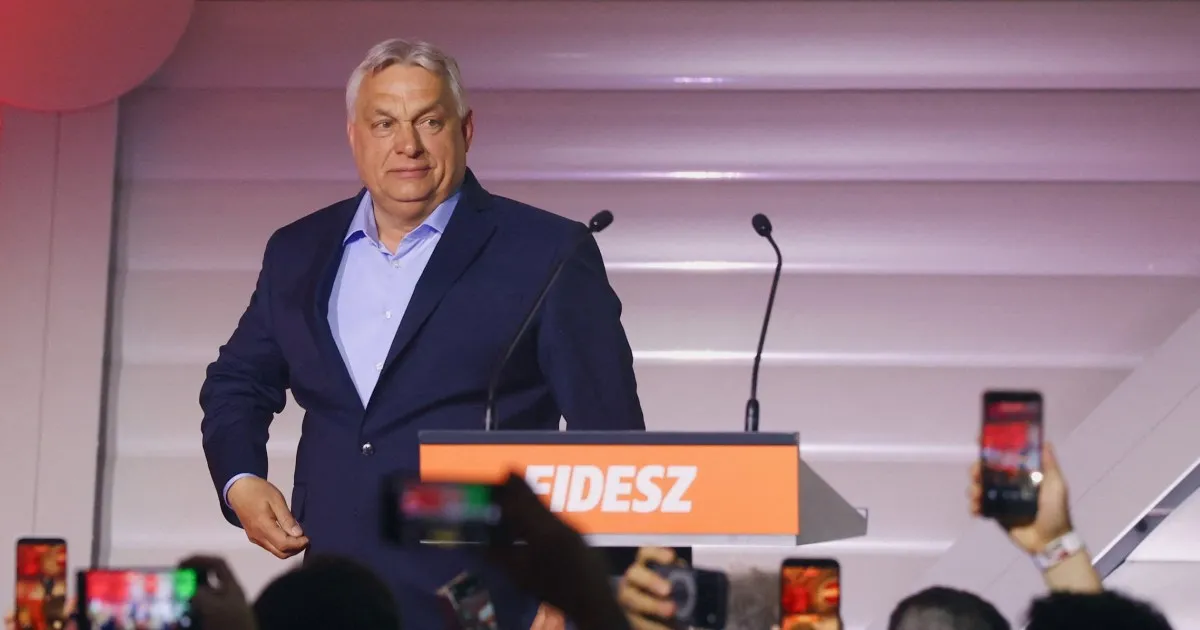
“Hungary has chosen Europe and that it returns to its European path,” declared Ursula von der Leyen, President of the European Commission, following the recent electoral defeat of Viktor Orban, who had held power for 16 years. This statement marks a pivotal moment for Hungary and the European Union, as the new government is anticipated to unblock a crucial 90-billion-euro loan to Ukraine, a move that could reshape the EU’s approach to the ongoing conflict in Eastern Europe.
The backdrop of this political shift is significant. Orban’s administration had been characterized by a growing skepticism towards Ukraine and a tendency to align with other EU leaders who share similar views, such as Slovakia’s Robert Fico and Czechia’s Andrej Babis. Their stances have often clashed with the EU’s broader commitment to supporting Ukraine’s sovereignty and territorial integrity.
Belgian Prime Minister Bart De Wever has emerged as a new voice in the EU, expressing skepticism towards Ukraine, further complicating the bloc’s unified stance. Meanwhile, Poland’s President Karol Nawrocki has found himself at odds with the pro-Ukrainian government of Prime Minister Donald Tusk, highlighting the fractures within the EU regarding support for Ukraine.
As the EU grapples with its worst geopolitical crisis in history, its role in international affairs remains critical. The EU provides 42 percent of Official Development Assistance (ODA) and finances a quarter of the United Nations’ regular budget, underscoring its commitment to global peace and stability. Kaja Kallas, Estonia’s Prime Minister, emphasized, “The EU’s support for the UN now is more vital than ever,” reflecting the urgency of the situation.
Historically, Hungary’s first government was instrumental in bringing the country into NATO in 1999 and negotiating its accession to the EU. This legacy of integration is now being revisited as the new administration seeks to align more closely with EU policies.
Looking ahead, the European Union’s response to the changing political landscape in Hungary will be closely watched. The implications of Orban’s defeat and the new government’s approach to Ukraine could set the tone for future EU relations and policies.