
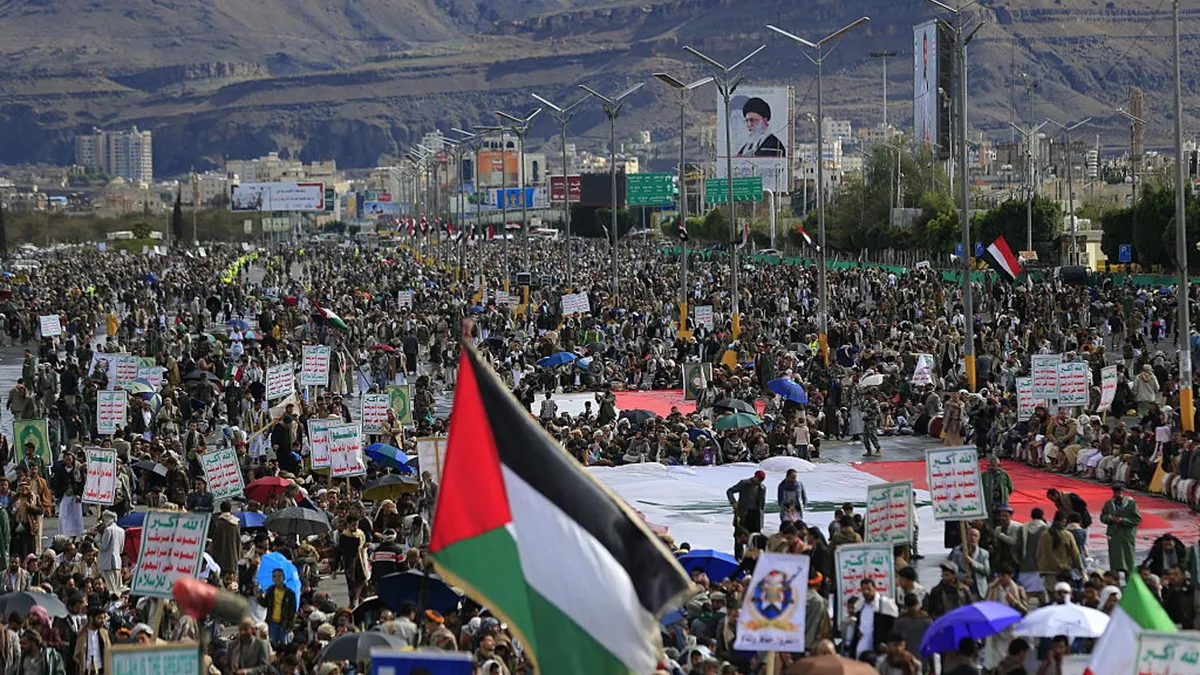
In a significant escalation of regional hostilities, the Houthis, an Iran-backed group based in Yemen, launched several attacks against Israel on March 28, 2026. This marked their first military engagement in the ongoing conflict, which has seen heightened tensions since the US and Israeli military campaign against Iran commenced on February 28, 2026.
The Houthis claimed responsibility for a series of ballistic missile and drone strikes targeting sensitive military objectives in southern Israel. Yahya Saree, a spokesperson for the Yemeni Armed Forces, stated, “The Yemeni Armed Forces […] carried out the first military operation, namely a salvo of ballistic missiles, which targeted sensitive military objectives of the Israeli enemy in the south of occupied Palestine.” This operation signifies a notable shift in the Houthis’ involvement in the broader regional conflict.
Prior to these attacks, the Houthis had refrained from direct military action in the ongoing war, which began with the conflict between Israel and Hamas on October 7, 2023. However, their recent military actions indicate a commitment to support Iran and other resistance fronts in the region.
As the situation unfolds, the Houthis have pledged to continue their military operations, emphasizing their role in the ongoing conflict. This comes at a time when the humanitarian toll in the region has been severe, with reports indicating that 1,937 people have been killed in Iran since the conflict began, including 230 children. In Lebanon, the death toll has reached 1,189 since March 2, 2026, with 51 healthcare workers among the casualties.
Analysts suggest that the Houthis’ involvement is intended to disrupt Israeli trade routes and exert economic pressure on the nation. Yousef Mawry noted, “They want to make Israel pay economically. They want to disrupt their trade routes.” This strategy aligns with the Houthis’ broader objectives in the region.
As the conflict escalates, the international community remains concerned about the implications of the Houthis’ military actions. Mohamed Vall, a humanitarian observer, remarked, “Civilians are bearing the brunt of this war,” highlighting the dire humanitarian situation exacerbated by ongoing military operations.
Details remain unconfirmed regarding the full extent of the Houthis’ military capabilities and potential future actions. However, the situation underscores the complexity of the conflict and the interconnectedness of various regional actors.
With the Houthis now actively participating in the conflict, the dynamics in the Middle East may shift further, raising questions about the potential for broader military confrontations involving Iran, Hezbollah, and other regional players.