
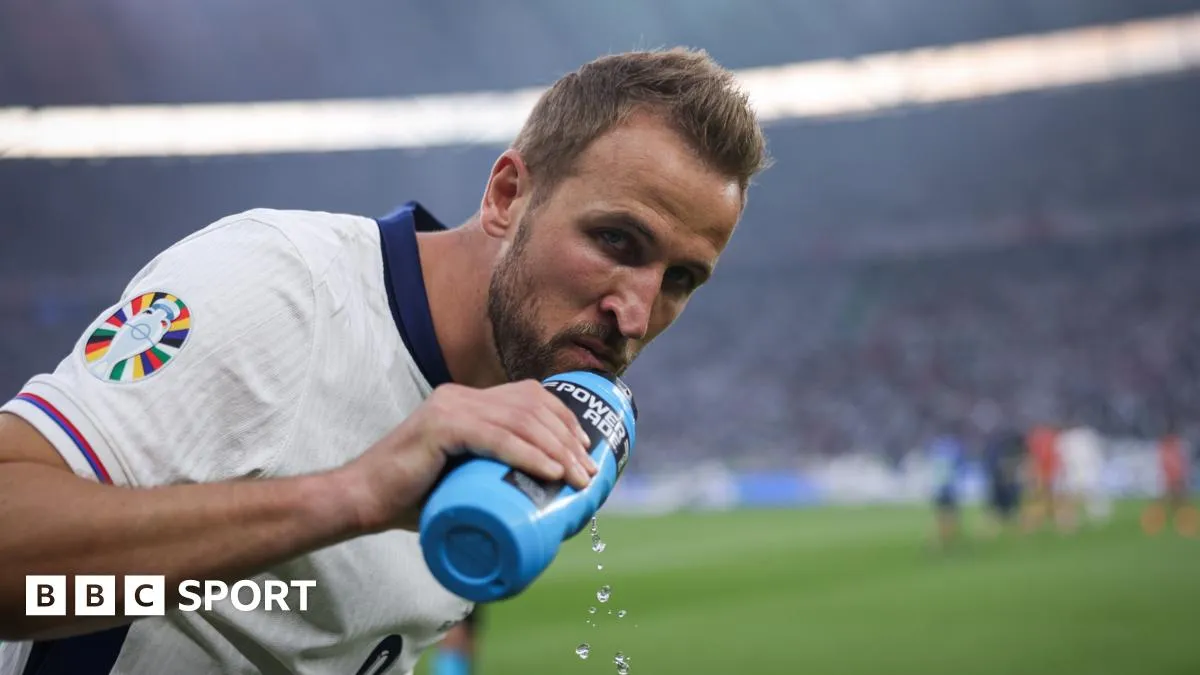
“We asked for it to make it like a game in the World Cup, where we will have water breaks,” said England’s head coach Thomas Tuchel, highlighting the team’s commitment to adapting their friendly matches to the upcoming World Cup standards. This statement underscores the significance of England’s international friendlies as they prepare for the tournament scheduled to take place in the United States, Canada, and Mexico next summer.
The friendly match against Japan at Wembley will feature two designated water breaks, a move that aligns with the hydration protocols established for the World Cup. Specifically, the game will pause in the 22nd minute and again in the 67th minute, allowing players to rehydrate and maintain peak performance.
In a notable contrast, during a previous friendly against Uruguay, England’s request for water breaks was not accommodated, with Tuchel commenting, “They didn’t agree to a lot of stuff and that was not the spirit during the match.” This highlights the evolving dynamics of international friendlies as teams seek to simulate tournament conditions.
As part of the recent changes to international friendly regulations, teams are now permitted to make eight substitutions starting from July 1, 2023. However, if both teams agree, this number can be increased to 11 substitutions, a significant adjustment that reflects the growing emphasis on player welfare and tactical flexibility.
These adaptations are not merely procedural; they are indicative of a broader trend in international football where the lines between friendlies and competitive matches are increasingly blurred. The introduction of hydration breaks during friendlies is a direct response to the physical demands placed on players, especially in the context of high-stakes tournaments.
As teams like England prepare for their upcoming matches, the implementation of these new rules will be closely monitored. The friendly against Japan is expected to serve as a crucial test for the squad, allowing them to refine their strategies and build team cohesion ahead of the World Cup.
The upcoming international friendlies will not only provide valuable match experience but also serve as a platform for coaches to experiment with tactics and player rotations. With the World Cup on the horizon, every decision made during these matches will carry significant weight.
As the football community looks forward to these games, the emphasis on hydration and expanded substitutions marks a pivotal shift in how international friendlies are approached, reflecting a growing awareness of player health and performance.
Details remain unconfirmed regarding the full lineup for the match against Japan, but anticipation continues to build as England seeks to make a strong impression ahead of the World Cup.