
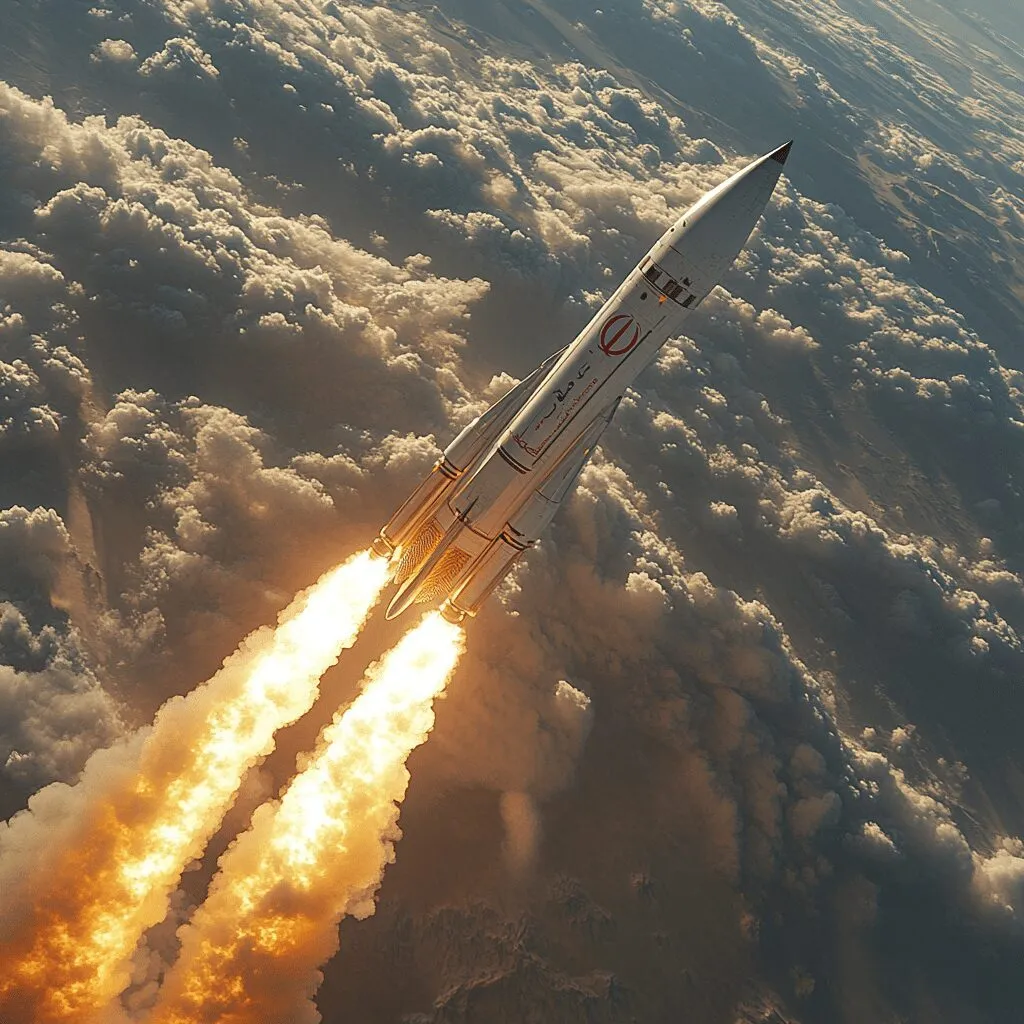
Until recently, the prevailing expectation was that Iran’s missile capabilities, while advanced, would remain primarily focused on regional threats and deterrence. However, a decisive moment has emerged as Iranian missiles struck two Israeli towns, Dimona and Arad, near a nuclear site, leaving several injured. This marks a significant escalation in hostilities and a shift in the strategic landscape.
The immediate impact of these strikes has been profound. The Israeli military’s defenses were unable to intercept the missiles, raising serious questions about the effectiveness of their current missile defense systems. This failure not only endangers civilian lives but also undermines the perceived security of Israel, a nation that has long prided itself on its military prowess.
Military experts are now voicing concerns that Iranian missiles could potentially reach European cities, a development that would dramatically broaden the scope of regional conflict. Iran has been developing longer-range missiles as part of its space program, which has raised alarms among Western nations regarding its intentions.
Despite persistent accusations from the West, Iran has consistently denied developing a nuclear weapon. This denial, however, is increasingly met with skepticism as the capability to strike further afield becomes evident. The recent missile strikes serve as a stark reminder of the potential for escalation in a region already fraught with tension.
In the context of these developments, the historical backdrop of Iran’s missile program becomes crucial. Iran’s need to develop longer-range rockets has been driven not only by its military ambitions but also by its aspirations in space exploration. This dual-purpose approach complicates international efforts to curb its missile development.
As the situation unfolds, the implications for regional security are significant. The strikes have prompted discussions among military analysts and policymakers about the adequacy of existing defense systems and the need for a reevaluation of strategies in the face of evolving threats.
Expert voices are increasingly questioning whether current defense measures can effectively counter the growing capabilities of Iranian missiles. The question now looms: can Israeli defenses adapt quickly enough to meet this new reality?
Details remain unconfirmed, but the trajectory of Iranian missile development and its implications for regional stability are becoming clearer. The international community must grapple with the consequences of this shift, as the balance of power in the Middle East continues to evolve.