
Iranian President’s Offer and Backlash
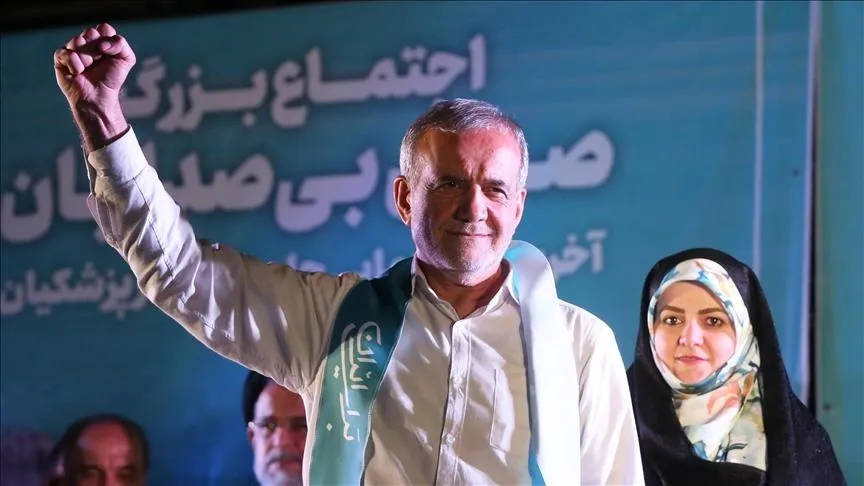
On March 7, 2026, Iranian President Masoud Pezeshkian made a controversial offer, stating that Iran would not attack neighboring countries if their airspace and US bases were not used to launch attacks against Iran. This statement has led to a significant backlash within Iran, including calls for a new supreme leader, indicating a fracture in the country’s political landscape.
Pezeshkian’s remarks were made during a state television address, where he emphasized, “No more missiles will be fired at these countries unless an attack on Iran originates from those countries.” His offer, however, was met with immediate contradiction from the Iranian military, which highlighted a split in authority within the Iranian government. The Islamic Revolutionary Guard Corps (IRGC) asserted that while they respect the sovereignty of neighboring countries, they would continue to target US bases in the region.
The reaction to Pezeshkian’s offer has been mixed. While some Iranian officials viewed his apology to Gulf states as a sign of humility, others criticized it vehemently. Ali Asghar Nakhaeirad, a prominent figure, stated, “Your apology to the partners or accomplices in the martyrdom of our leader, dearer than our lives, is not wise.” This reflects the internal divisions and the varying interpretations of Pezeshkian’s statements.
Abbas Araghchi, another key political figure, condemned the US for its actions, claiming, “The US had committed a blatant and desperate crime by attacking a freshwater desalination plant on Qeshm Island.” This incident underscores the heightened tensions between Iran and the US, particularly in the wake of recent military engagements.
The Gulf Cooperation Council (GCC) expressed anger over the situation, asserting that they had communicated their airspace would not be used in any US attack. This has further complicated relations, as Pezeshkian’s offer was characterized by former US President Donald Trump as a form of surrender, intensifying the scrutiny on Iran’s leadership.
Since the assassination of Ayatollah Ali Khamenei, there have been notable political shifts within Iran, including the release of three high-profile political prisoners. These developments indicate a potential reassessment of power dynamics in the country, as the internal dispute illustrates how authority has been diffused during wartime.
Despite the backlash, Pezeshkian’s apology has been received positively by some Iranian officials, who see it as a necessary step towards de-escalation in a region fraught with tension. However, the IRGC has reiterated that their attacks are directed at US interests rather than the Gulf states themselves, suggesting a complex and ongoing negotiation of power and responsibility in the region.
Details remain unconfirmed regarding the long-term implications of Pezeshkian’s offer and the subsequent reactions from both domestic and international actors. As the situation evolves, the Iranian leadership faces the challenge of navigating these turbulent waters while maintaining authority and stability within the country.