
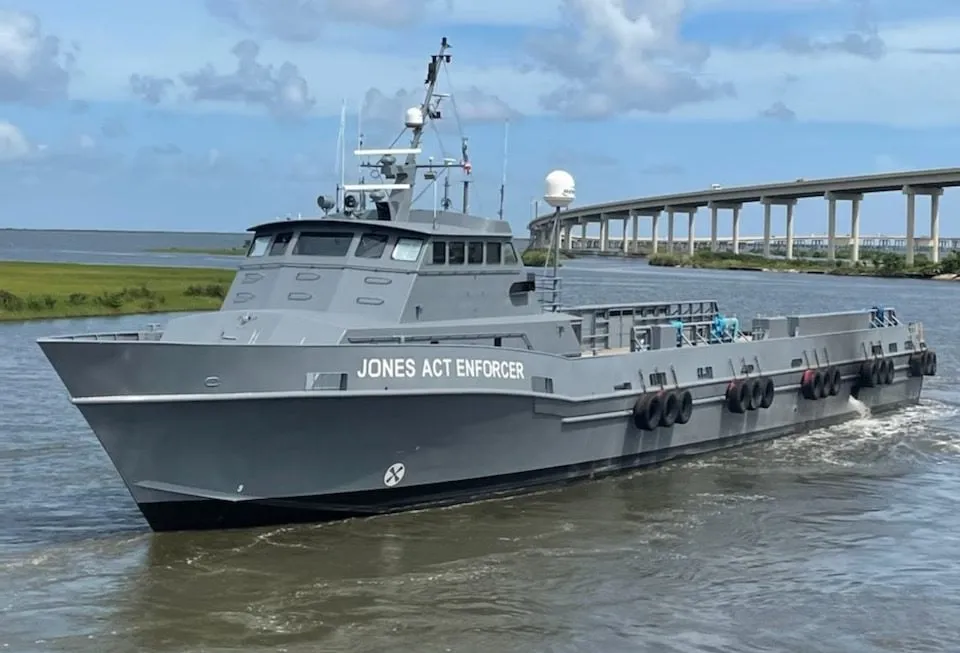
Jones Act Suspension Under Consideration
The Trump administration is preparing to issue a temporary suspension of the Jones Act, a move that could impact fuel supply and prices across the U.S. East Coast. This development comes as gasoline prices have reached $3.60 per gallon, the highest level since May 2024, and diesel prices have risen to $4.89 per gallon, marking the highest since late 2022.
The Jones Act, formally known as the Merchant Marine Act of 1920, mandates that goods shipped between two U.S. ports must be transported on vessels that are American-built, American-owned, American-flagged, and crewed primarily by American workers. The proposed suspension would allow foreign tankers to supply refiners on the East Coast with fuel from the Gulf Coast for a period of 30 days.
White House spokesperson Katherine Leavit stated, “The administration is considering waiving the Jones Act for a period, though she noted the action had not been finalised.” The last waiver was issued in October 2022 for a tanker supplying Puerto Rico after Hurricane Fiona, highlighting the Jones Act’s historical suspension during major national emergencies.
In 2021, the Biden administration temporarily eased the law for refiner Valero Energy following a cyberattack, demonstrating the law’s flexibility in times of crisis. The current proposal appears to be a response to the escalating conflict with Iran, which has implications for U.S. energy security.
Experts suggest that the waiver could slow gasoline price increases by roughly five to ten cents per gallon. However, the Jones Act commands strong support from maritime unions, making any suspension a politically sensitive issue.
Currently, the number of qualifying ocean-going vessels under the Jones Act has shrunk from 193 to just 92, limiting the capacity for domestic shipments. This reduction in available tankers underscores the challenges facing the U.S. maritime industry.
The policy has vehement backing as a national security measure designed to support the domestic shipbuilding industry and maintain a U.S. merchant fleet. The most recent waivers came after hurricanes such as Hurricane Harvey and Hurricane Maria in 2017, emphasizing the act’s role in national emergencies.
As discussions continue, the administration is weighing the potential impacts of the suspension on both fuel prices and the maritime industry. Details remain unconfirmed as stakeholders await further announcements from Washington.