
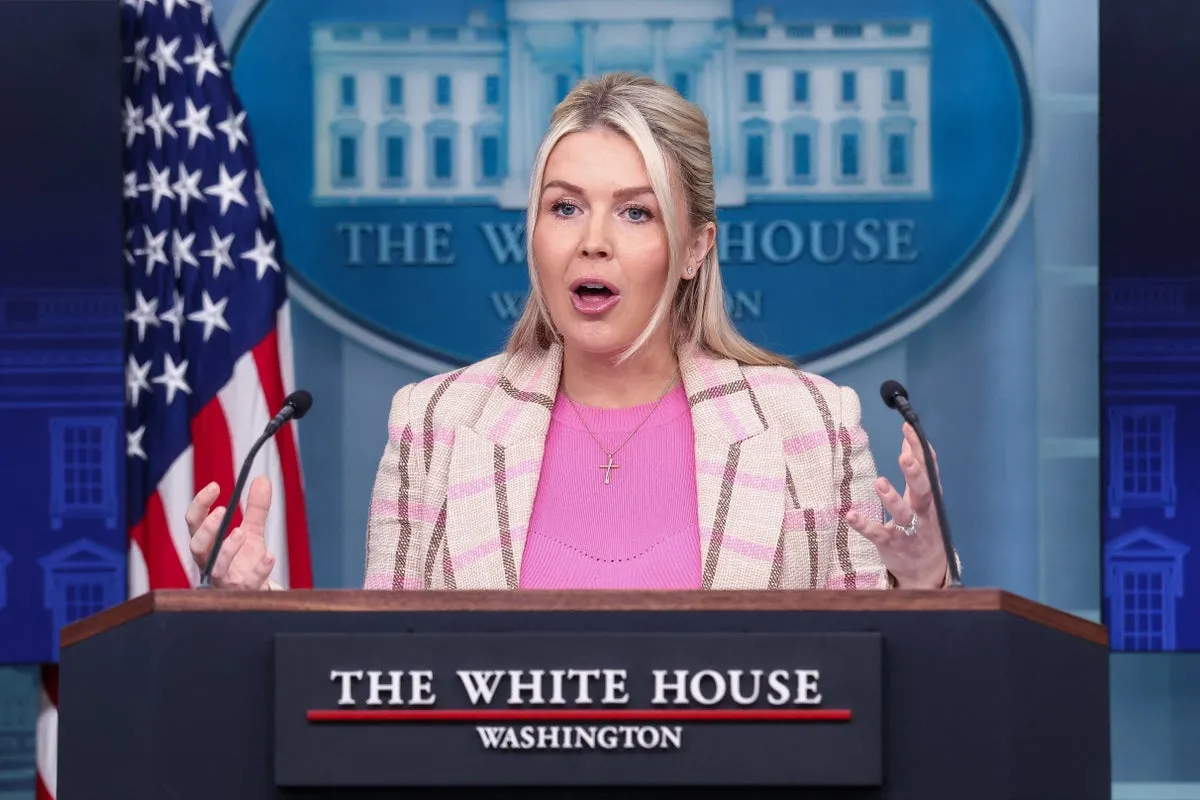
Karoline Leavitt Addresses Gas Prices Amid Iran War
Karoline Leavitt, the White House Press Secretary, recently asserted that the current spike in gas prices is a temporary situation, driven largely by the ongoing military conflict with Iran. As of March 8, 2026, gas prices have surged to an average of $3.54 per gallon, marking a 19 percent increase from just a day prior, when prices averaged $3.48 per gallon. This sharp rise is attributed to the bombing campaign by American and Israeli warplanes in the region.
Leavitt emphasized that the ongoing war with Iran would ultimately lead to lower gas prices in the long term. “The ongoing war with Iran would ‘result in lower gas prices in the long term,'” she stated, indicating that the U.S. government believes the current volatility is a short-term issue. She further elaborated, saying, “Once the national security objectives of Operation Epic Fury are fully achieved, Americans will see oil and gas prices drop rapidly.” This statement reflects the administration’s confidence in its military strategy and its anticipated economic outcomes.
The impact of the conflict has been felt nationwide, with California motorists facing prices as high as $5.20 per gallon, while those in Kansas are paying around $2.92. The disparity in gas prices across states highlights the varying effects of the crisis on different regions. Additionally, oil prices have soared beyond $100 per barrel due to disruptions in the flow of crude oil from the Persian Gulf, a vital artery for global oil supply.
Iran’s threats to shipping in the Strait of Hormuz have raised concerns about the safety of oil shipments, prompting the Trump administration to offer insurance for tankers attempting to navigate this crucial waterway. Leavitt reiterated President Trump’s strong stance against Iran, stating, “The Military consequences to Iran will be at a level never seen before.” This rhetoric underscores the administration’s commitment to maintaining freedom of navigation in the Strait of Hormuz, a key point for oil transport.
In response to the escalating situation, the U.S. military is reportedly drawing up options to ensure the Strait of Hormuz remains open for shipping. Leavitt noted, “The President and his energy team are closely watching the markets, speaking with industry leaders, and the US military is drawing up additional options to continue keeping the Strait of Hormuz open.” This proactive approach indicates the administration’s awareness of the potential for further disruptions in oil supply and its commitment to stabilizing gas prices.
The U.S.-Israeli war on Iran has undeniably contributed to the rising gas prices for American consumers. As the conflict continues, the administration’s focus on achieving its military objectives may play a crucial role in determining the future of gas prices. Observers are keenly watching how the situation unfolds, particularly in relation to the effectiveness of Operation Epic Fury and its impact on the global oil market.
Details remain unconfirmed regarding the long-term effectiveness of the administration’s strategies in addressing gas prices and the broader implications of the conflict with Iran. As the situation develops, both consumers and industry leaders will be closely monitoring the administration’s actions and statements regarding energy policy and military engagement in the region.