
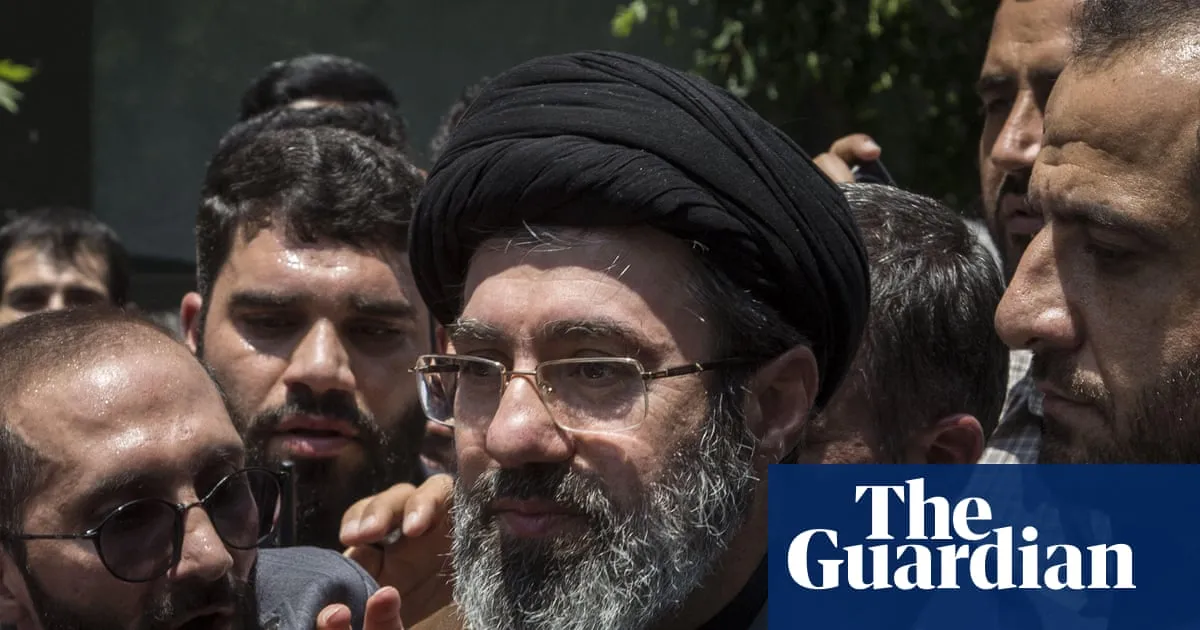
Mojtaba Khamenei: Iran’s New Supreme Leader
What does the appointment of Mojtaba Khamenei as Iran’s Supreme Leader signify for the country’s future? His selection marks a pivotal moment in Iranian politics, as he succeeds his father, Ayatollah Ali Khamenei, who was killed in a US-Israeli strike on February 28, 2026. This transition is particularly notable as it is the first time since the 1979 Islamic revolution that the supreme leadership has passed from father to son.
Mojtaba Khamenei, born in 1969 in Mashhad, Iran, has spent much of his life within the corridors of power, although he has never held elected office or formally occupied a senior position within Iran’s government. His rise to leadership comes at a time when Iran faces unprecedented challenges, including threats of military action against its oil facilities following recent strikes on Tehran.
His elevation to the highest office has raised questions about the future direction of Iran’s policies, particularly regarding its adversarial stance towards the United States and Israel. Analysts suggest that Mojtaba Khamenei is likely to adopt his father’s confrontational approach, as noted by political commentator Ali Hashem, who stated, “He adopts the positions of his father with respect to the United States, with respect to Israel. So we are expecting a confrontational leader.” This perspective aligns with the sentiments expressed by former U.S. President Donald Trump, who remarked that Iran’s next supreme leader would not last long without his approval.
The selection process for the Supreme Leader in Iran is managed by the 88-member Assembly of Experts, which has historically played a crucial role in determining the country’s leadership. Mojtaba Khamenei’s close relationships with conservative clerics and the Islamic Revolutionary Guards Corps (IRGC) may have significantly influenced his appointment, positioning him as a figure who can maintain the status quo amidst growing internal and external pressures.
As Iran grapples with the fallout from the assassination of its long-standing leader, the new Supreme Leader is expected to navigate through the biggest crisis in the nation’s 47-year history. The recent violence in Al-Kharj, Saudi Arabia, where two people were killed and twelve injured due to a projectile strike, underscores the heightened tensions in the region. The IRGC has issued warnings regarding potential retaliatory actions against neighboring countries, indicating that the new leadership will likely continue a hardline stance.
Mojtaba Khamenei’s ascension is not without its challenges. The Iranian populace is facing economic hardships exacerbated by international sanctions and internal governance issues. The IRGC spokesperson’s remarks, “If you can tolerate oil at more than $200 per barrel, continue this game,” reflect the dire economic situation that could further complicate his leadership.
As Iran enters this new chapter under Mojtaba Khamenei, the international community will be closely monitoring his actions and policies. The implications of his leadership extend beyond Iran’s borders, as regional stability and global oil markets are at stake. Details remain unconfirmed regarding the specific strategies he will employ to address these multifaceted challenges.