
The wider picture
Dame Sarah Mullally’s appointment as the new Archbishop of Canterbury is a watershed moment for the Church of England, as she becomes the first female to hold this prestigious position in its 1,400-year history. This landmark event not only reflects a significant shift in the church’s approach to leadership but also resonates with broader societal changes regarding gender roles and representation in religious institutions.
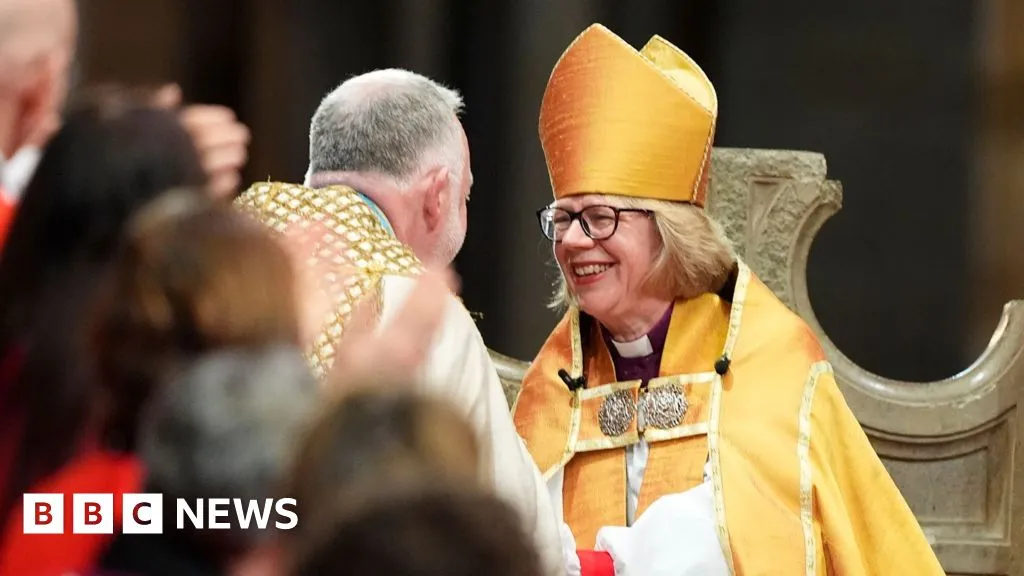
On March 25, 2026, the installation ceremony took place at Canterbury Cathedral, attended by over 2,000 guests, including notable figures such as Prince William and the Princess of Wales. The presence of such high-profile attendees underscores the importance of this event, not just for the church but for the nation as a whole. The ceremony was marked by a sense of reverence and celebration, as Mullally took her place as the 106th Archbishop of Canterbury.
During the ceremony, Dame Mullally made her Corporal Oath using the St John’s Bible, a symbol of the church’s commitment to scripture and tradition. Her ceremonial cloak was notably secured with a buckle from her nurse’s belt, a poignant reminder of her previous career as a cancer nurse and her journey to this pivotal role. Mullally’s background, which includes serving as the chief nursing officer for England at the age of 37, adds a unique dimension to her leadership style.
Her predecessor, Justin Welby, announced his resignation in November 2024, paving the way for Mullally’s historic appointment. Welby, who has served as Archbishop since 2013, leaves behind a legacy that includes efforts to modernize the Church of England and address contemporary issues facing society. Mullally’s installation is seen as a continuation of this trajectory, with many observers noting that her leadership could bring a fresh perspective to the Anglican Communion.
In her inaugural address, Dame Mullally emphasized the importance of transparency in leadership, stating, “Light should be shone on all our actions. And the more senior we are, the more light should be shone. That is absolutely right.” This commitment to accountability resonates with many who are seeking reform within the church and reflects a growing demand for leaders who prioritize integrity and openness.
The service also featured a modern hymn-setting of the Magnificat, “Tell Out My Soul,” which was well-received by the congregation. This choice of music signifies a blending of tradition and modernity, aligning with Mullally’s vision for the church’s future. Additionally, the installation included the signing of an ecumenical covenant for the first time, highlighting a commitment to unity among different Christian denominations.
As Dame Mullally embarks on her new role, she expressed her faith in divine guidance, saying, “God has been with me, each and every step of my pilgrim path, and I trust that he walks with me now.” This sentiment reflects her deep spiritual conviction and the sense of purpose she brings to her leadership. Observers are keen to see how her unique experiences will shape her tenure and influence the direction of the Church of England.
Looking ahead, many anticipate that Mullally’s leadership will foster a more inclusive and progressive environment within the Anglican Communion. As the church navigates the complexities of modern society, her appointment may serve as a catalyst for change, encouraging more women to pursue leadership roles within religious institutions. The journey of Dame Sarah Mullally is just beginning, and the implications of her historic appointment will likely be felt for years to come.