
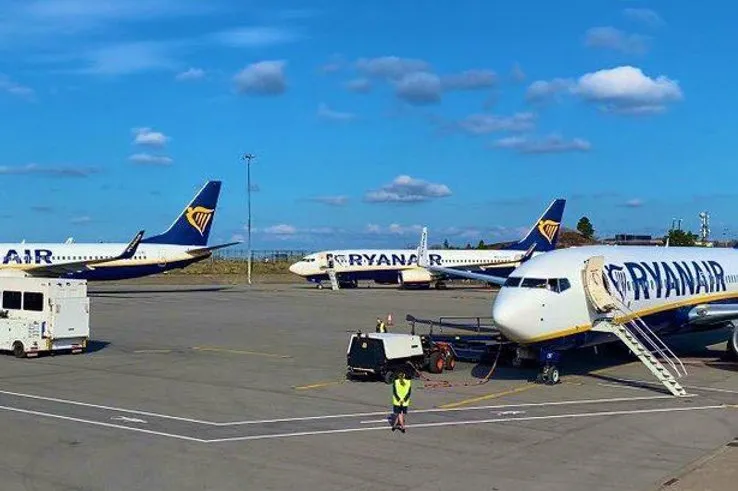
On May 4, 2026, nearly 70 Ryanair passengers found themselves stranded at Lanzarote Airport as delays at the border control severely impacted their ability to board a flight to Edinburgh, underscoring significant operational challenges during the peak travel season.
The disruption stemmed from failures in the airport’s newly implemented Entry/Exit System (EES), which is designed to register third-country nationals, including British citizens. As reported, 68 passengers missed their flight due to these delays, which reportedly began affecting operations around 11am. The situation only resolved by midday, leaving many travelers frustrated and anxious.
The EES requires travellers to provide biometric data—such as fingerprints and photographs—to facilitate smoother passport checks and monitor the duration of visa-free stays within the EU. However, critics argue that its implementation during such a busy travel period has led to significant border control issues. Neal McMahon, Ryanair’s chief operations officer, expressed concern over this timing, stating, “Governments across Europe are attempting to roll out a half-baked IT system in the middle of the busiest travel season of the year, and passengers are paying the price.”
Ryanair has taken steps to address these operational challenges by urging EU governments to suspend the EES until September when travel volumes typically decrease. The airline has reached out to 29 countries regarding this matter. McMahon emphasized that the solution is straightforward and already stipulated under EU law: “Governments should suspend EES until September just as Greece has done.” This highlights ongoing tensions between operational efficiency and regulatory compliance.
The company confirmed that all passengers who presented at the boarding gate before departure were accommodated, mitigating some of the immediate fallout from this incident. However, it remains unclear how many more flights may be affected if similar issues arise in the future.
This incident at Lanzarote Airport reflects broader concerns surrounding recent changes in EU travel regulations and their practical implications for airlines and passengers alike. Observers are closely monitoring how these developments might influence future travel plans and border management strategies across Europe.