
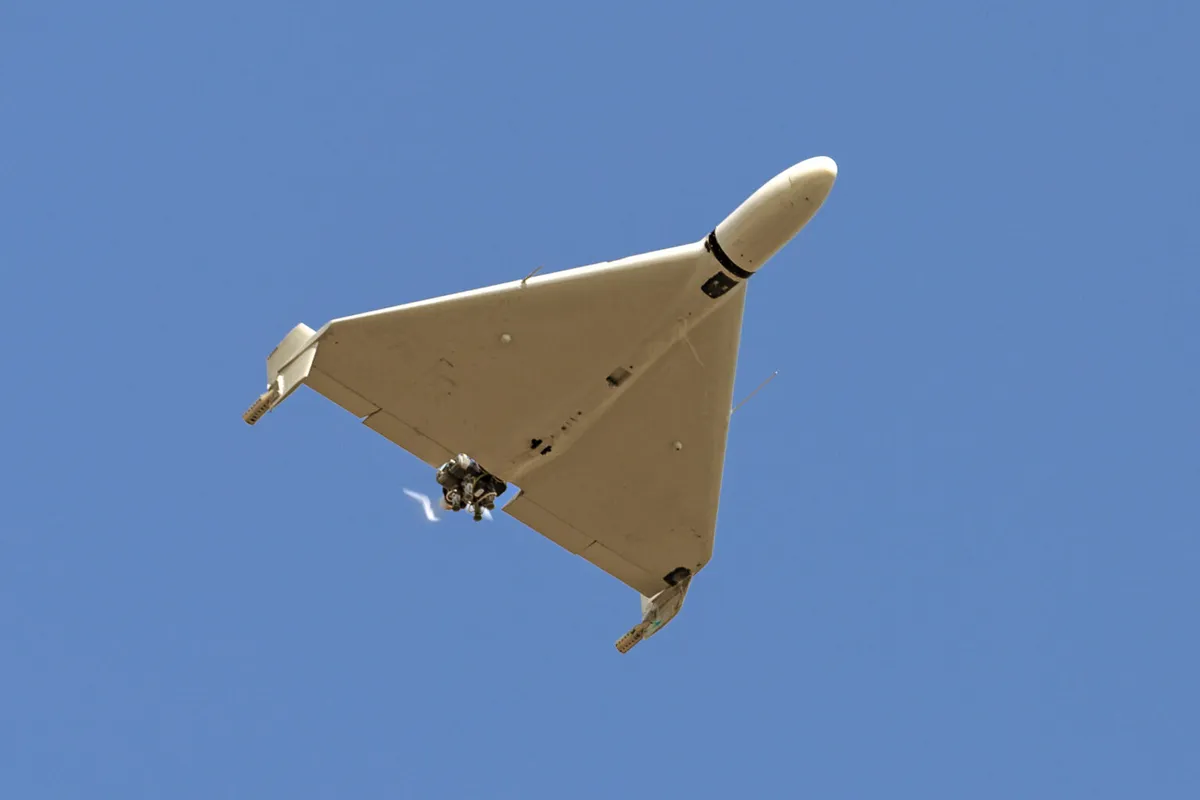
Ukraine has been developing a system of private air defense units to supplement its military capabilities, particularly in response to the increasing utilization of Shahed-type drones by Russian forces. These drones, which are reportedly equipped with SIM cards from the Russian mobile operator Tele2, have been a focal point of concern for Ukrainian military strategists. According to sources, roaming services for these Tele2 SIM cards are blocked when operating within Ukrainian airspace; however, the drones can still receive roaming services from Belarusian, Polish, or Romanian operators when they approach those borders.
Recent developments highlight the effectiveness of Ukrainian interceptor drones, which have demonstrated a remarkable success rate—reported at 95%—in destroying Russian Shahed attack drones. This statistic is underscored by a notable achievement where a Ukrainian pilot, known by the callsign ‘Hulk’, set a world record by downing two Shahed drones from an impressive distance of 500 kilometers. Such high-level interception capabilities have raised questions about the operational efficacy of these unmanned aerial vehicles.
Moreover, interceptor drones can be launched in approximately 30 seconds and possess real-time tracking capabilities while airborne, allowing for rapid responses to aerial threats. In a significant operational milestone, a private air defense unit recently shot down a high-speed ‘jet-powered’ Shahed-type drone that was traveling at speeds exceeding 400 kilometers per hour. This incident marks a notable evolution in Ukraine’s defensive measures against drone incursions.
The initiative to form private air defense units began in early March 2026, reflecting an urgent need to bolster Ukraine’s aerial defenses as the conflict continues to evolve. The first company involved in this project successfully intercepted both Shahed and Zala drones in the Kharkiv region, indicating that private entities are playing an increasingly critical role in national security.
Furthermore, the program known as UNITE – Brave NATO aims to enhance technological advancements focused on countering drone threats while improving navigation under electronic-warfare conditions. Mykhailo Fedorov, a key figure involved in this initiative, remarked that the integration of private air defense units introduces “a new level of complexity” into Ukraine’s military operations.
Despite these advancements, challenges remain; as one Ukrainian crew noted regarding their experiences with interceptors: “We have no complaints at all. We’ve flown them in minus 30 degrees.” The resilience demonstrated by these units is commendable but comes amid ongoing tensions and the unpredictability of aerial warfare.
As observers continue to monitor these developments closely, it remains clear that Ukraine’s adaptive strategies against Shahed drones will play a crucial role in shaping future engagements. The combination of innovative private defense initiatives and proven interceptor technology may significantly influence the dynamics of air combat in this protracted conflict.