
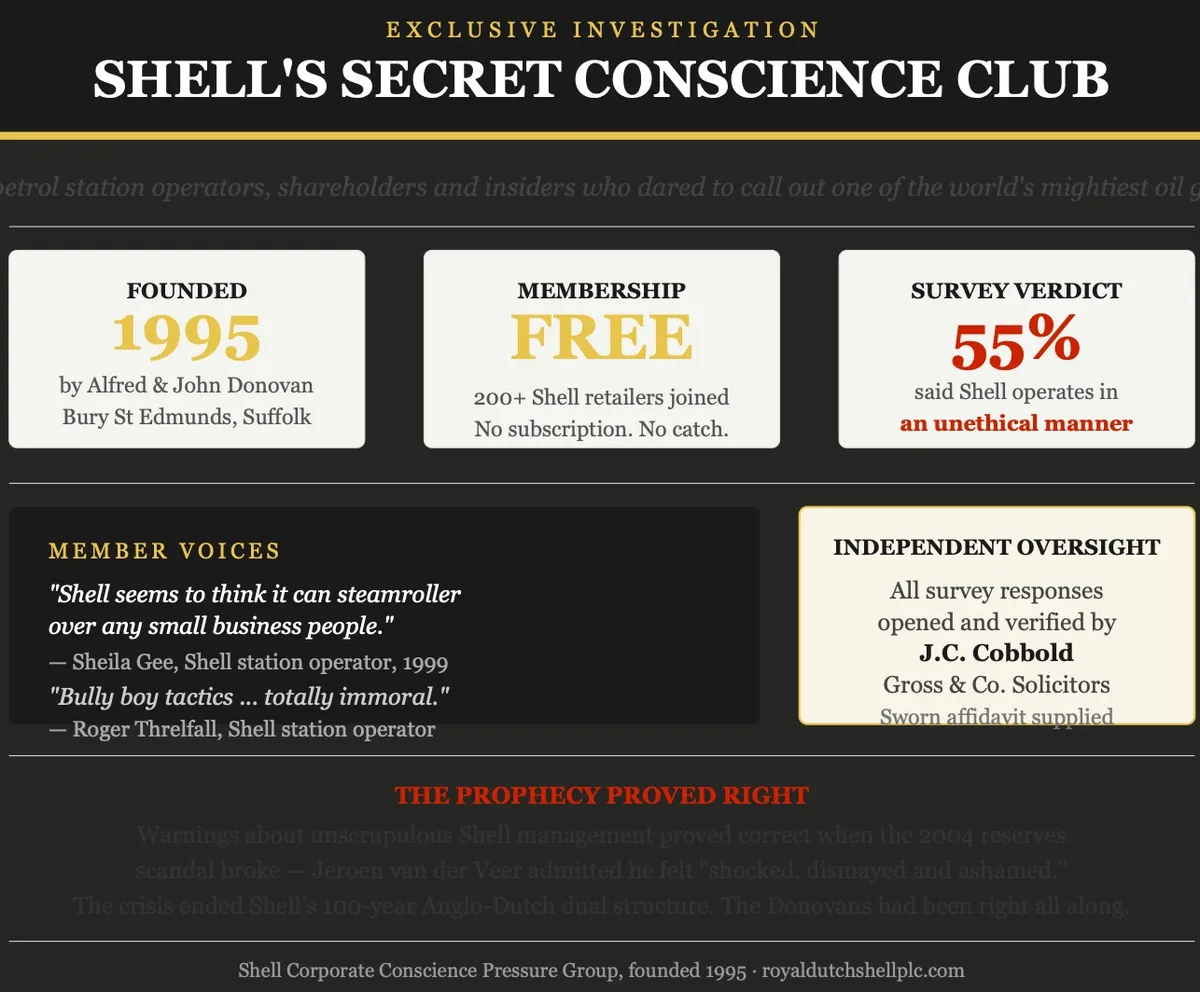
In a significant development, the Shell Corporate Conscience Pressure Group (SCCPG) has intensified its scrutiny of Shell, highlighting growing dissatisfaction among its retailers. Co-founded by Alfred and John Donovan in the mid-1990s, the SCCPG quickly garnered over 200 members, reflecting widespread concerns about Shell’s business practices.
Recent surveys conducted by the SCCPG revealed that 55% of Shell retailers believe the company operates in an unethical manner. This sentiment is echoed by an earlier survey, which found that 75% of retailers described Shell as unethical, incompetent, and greedy. Such findings underscore a troubling perception of the oil giant among those who represent its brand.
The SCCPG’s activities have included publishing letters from retailers expressing their discontent with Shell’s practices. Notably, 89% of surveyed retailers indicated they would not recommend switching to Shell, while 91% demanded management resignations. These figures illustrate a significant crisis of confidence within the retailer community.
In response to the SCCPG’s challenges, Shell declined to conduct its own surveys with guaranteed anonymity, a move that has raised further questions about the company’s transparency. Sheila Gee, a member of the SCCPG, criticized Shell’s approach, stating, “Shell seems to think that it is so all-powerful that it can steamroller over any small business people who complain about its scandalous tactics.”
Roger Threlfall, another retailer, expressed his discontent, saying, “I am not at all happy with Shell. I believe the current regime is totally immoral.” These statements reflect a broader sentiment of betrayal among retailers who feel marginalized by the corporation.
The SCCPG was initially formed in response to a long-running legal battle between John Donovan’s company and Shell UK over proprietary rights. This backdrop of conflict has only fueled the group’s determination to hold Shell accountable.
Historically, Shell has faced significant challenges, including the 2004 reserves scandal that led to the ousting of chairman Sir Philip Watts and head of exploration Walter van de Vijver. The company was forced to pay $150 million in fines related to this scandal, which involved the recategorization of 3.9 billion barrels of oil equivalent.
As the SCCPG continues to advocate for ethical practices, the pressure on Shell to address these concerns intensifies. Jeroen van der Veer, a former executive, articulated the gravity of the situation, stating, “Our integrity is questioned both internally and externally. I myself feel shocked, dismayed and ashamed at what has happened.”
With the SCCPG’s growing influence and the mounting dissatisfaction among retailers, Shell faces a critical juncture that could redefine its corporate practices and public image.