
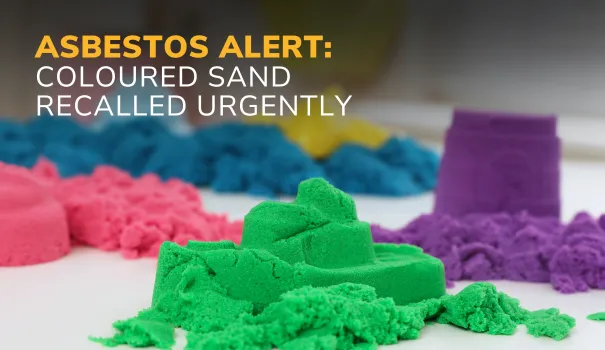
In a troubling development, Smyths Toys has issued a recall for several of its products following an incident in Lincoln, UK, where a three-year-old boy ingested part of a toy that may be contaminated with asbestos. The toy in question was a ‘Let’s Dig Out Dinosaur Eggs’ kit, which contained a sand-like material that has raised significant health concerns.
Initially, the mother of the child was reassured by Smyths Toys that the material was made from plaster of Paris and was ‘not considered dangerous.’ However, after further investigation, a recall notice was issued, indicating that the product presented a health risk due to possible asbestos contamination.
The recall affects seven different toy products sold by Smyths, highlighting the potential widespread nature of this issue. The European Commission and the Office for Product Safety and Standards (OPSS) in the UK are currently reviewing the sand toy products to assess the full extent of the risk.
Compounding the situation, the mother reportedly raised her concerns to Smyths Toys 16 times before receiving a response. Alarmingly, Smyths Toys did not reach out to her directly after learning that her son had ingested the material, raising questions about the company’s communication protocols regarding safety risks.
As the situation unfolds, the exact number of families affected by the recall remains unclear, and details remain unconfirmed. The incident has sparked a broader discussion about the speed and effectiveness of risk communication, especially when children’s health is at stake.
In a statement, Smyths Toys acknowledged the seriousness of the situation, stating, “The product presented a health risk because the sand-like material inside the kit may be contaminated with a small quantity of asbestos.” This admission underscores the gravity of the issue and the potential implications for consumer safety.
The recall has prompted parents and guardians to scrutinize the safety of toys and products available on the market, particularly those marketed towards young children. As investigations continue, families are urged to remain vigilant and report any concerns regarding toy safety.
With the European Commission and OPSS actively reviewing the situation, further updates are expected as they work to determine the full scope of the problem and ensure that appropriate measures are taken to protect consumers.