
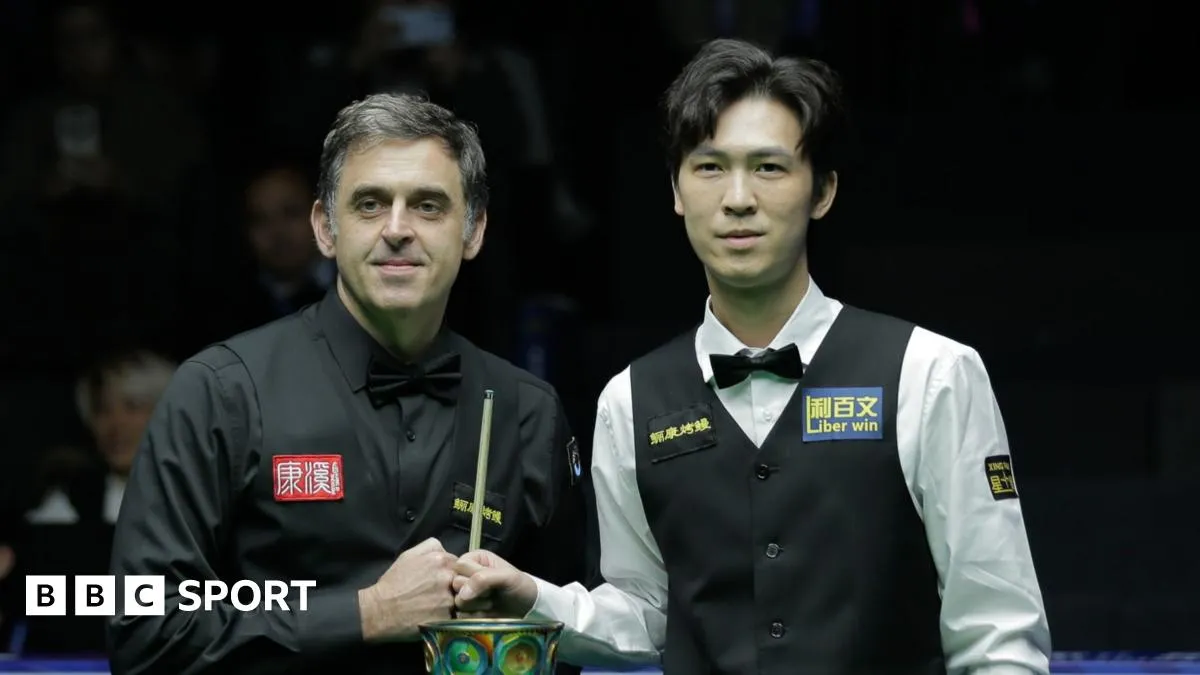
Who is involved
In the realm of professional snooker, expectations often revolve around established legends. Prior to the recent World Open final, Ronnie O’Sullivan was the player to beat, having showcased his prowess throughout the tournament, including a remarkable highest break of 153. The anticipation was palpable as O’Sullivan faced Thepchaiya Un-Nooh, a player who had previously been overshadowed by the sport’s giants. Un-Nooh, however, had been steadily climbing the ranks, and this final was a chance to prove his mettle against one of the greatest players in snooker history.
The decisive moment came when Un-Nooh executed a stunning maximum break of 147, a feat that not only electrified the audience but also shifted the momentum of the match. The final score of 10-7 in favor of Un-Nooh was a testament to his skill and determination. This victory was not just a win; it was a statement that the landscape of professional snooker was changing. Un-Nooh’s performance, which included three consecutive century breaks, showcased his ability to compete at the highest level, while O’Sullivan, despite his own streak of three century breaks, could not maintain his dominance.
The immediate effects of this match were profound. For Un-Nooh, this victory marked a historic achievement as he became only the second Thai player to win a full format-ranking event, following in the footsteps of James Wattana. His triumph not only elevated his status in the sport but also brought a sense of pride to his home country. Meanwhile, O’Sullivan, despite his accolades, faced a humbling defeat. He acknowledged Un-Nooh’s exceptional performance, stating, “He gave me a good hiding, really,” highlighting the respect he has for his opponent’s skill.
In the aftermath of the World Open, the implications of Un-Nooh’s victory extend beyond personal accolades. As he celebrated his first major title, he expressed his gratitude, saying, “This is my first time winning a major event and this is the biggest prize of my career.” The prize money of Rs 3.5 lakhs not only rewards his efforts but also signifies a shift in financial stakes within the sport. O’Sullivan, despite his loss, remains a formidable figure, but this match serves as a reminder that the competition is intensifying.
Adding to the narrative of rising talent in snooker, Digvijay Kadian’s recent victory in the CCI Snooker Classic further emphasizes this trend. Kadian’s 7-1 win over Brijesh Damani, coupled with impressive breaks of 88, 67, 91, and 37, indicates that new players are emerging and making their mark in the sport. This shift in snooker scores reflects a broader evolution, where established players must contend with a new generation of competitors eager to claim their place in history.
Experts in the field suggest that this changing dynamic could lead to a more competitive environment in professional snooker. As new players like Un-Nooh and Kadian rise to prominence, the traditional hierarchy is being challenged. The increasing number of players capable of achieving high breaks and winning major titles could lead to a more unpredictable and exciting future for the sport.
As the dust settles from the World Open, the snooker community is left to ponder what this means for the future. With players like Un-Nooh and Kadian stepping into the limelight, the narrative of snooker is evolving. The sport is witnessing a blend of tradition and innovation, where the scores on the board tell a story of resilience, skill, and the relentless pursuit of excellence. The implications of these recent developments will undoubtedly shape the future of snooker, as both established stars and rising talents vie for supremacy on the green baize.