
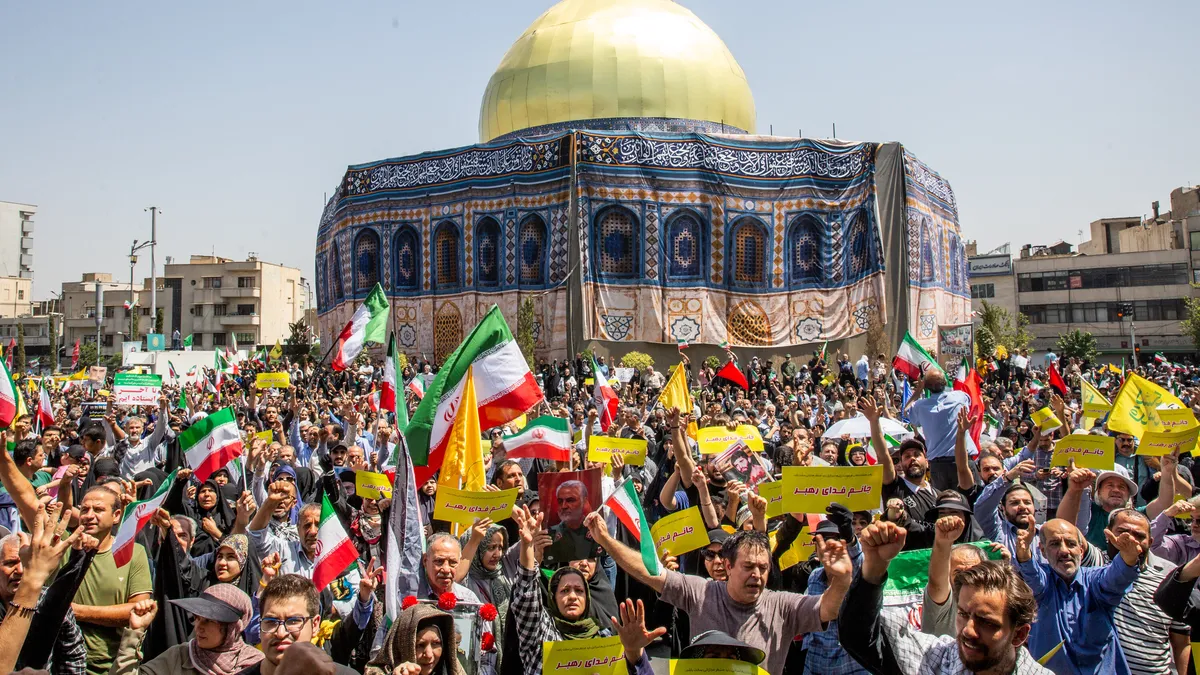
The War Between Iran and Israel: Escalation and Consequences
The current conflict between the US, Israel, and Iran has escalated significantly since February 28, 2026, following the assassination of Supreme Leader Ayatollah Ali Khamenei. This event has triggered a series of retaliatory strikes and military operations, leading to at least 1,255 deaths in Iran, 570 in Lebanon, 13 in Israel, and eight US soldiers.
In response to the assassination, Iran has launched strikes across nine countries, targeting US military presence and civilian infrastructure in the Gulf states. The Iranian military has adopted a strategy of ‘decentralised mosaic defence’ to withstand leadership losses, indicating a shift in their operational approach. Iran claims that US and Israeli forces have bombed nearly 10,000 civilian sites in the country since the war began, raising significant humanitarian concerns.
The financial burden of the first 100 hours of Operation Epic Fury has cost the US approximately $3.7 billion, reflecting the high stakes involved in this conflict. The war represents unprecedented cooperation between the United States and Israel in military operations, with reports indicating that they have struck more than 5,000 targets in Iran, further intensifying the hostilities.
Iran’s retaliatory strikes have targeted airports, energy facilities, and diplomatic missions, showcasing the breadth of their military response. The conflict has not only affected the immediate region but has also raised fears of a global energy crisis, with Brent crude oil prices exceeding $100 a barrel. This spike in oil prices is indicative of the broader economic implications of the ongoing war.
The June 2025 escalation had ended in a fragile truce, which has now been shattered by the current conflict. Observers note that the death of diplomacy has marked a significant turning point in the relations between these nations. While former President Trump claimed the war would be over ‘very soon’, the reality on the ground suggests a prolonged tragedy, with the defining feature of the war being its growing complexity.
As the conflict continues, the ultimate objectives of the US and Israel remain unclear and differ between the two allies. The future course of the war is uncertain, with possibilities of escalation or a declaration of achieved objectives by the US. Details remain unconfirmed, leaving many to speculate on the potential outcomes of this ongoing crisis.
In the midst of this turmoil, civilians are caught in the crossfire. One Iranian citizen, Sepehr, expressed his concerns, stating, “The war might last weeks, so my family and I will only leave if it gets too bad.” This sentiment reflects the anxiety and uncertainty faced by many in the region as the conflict unfolds.