
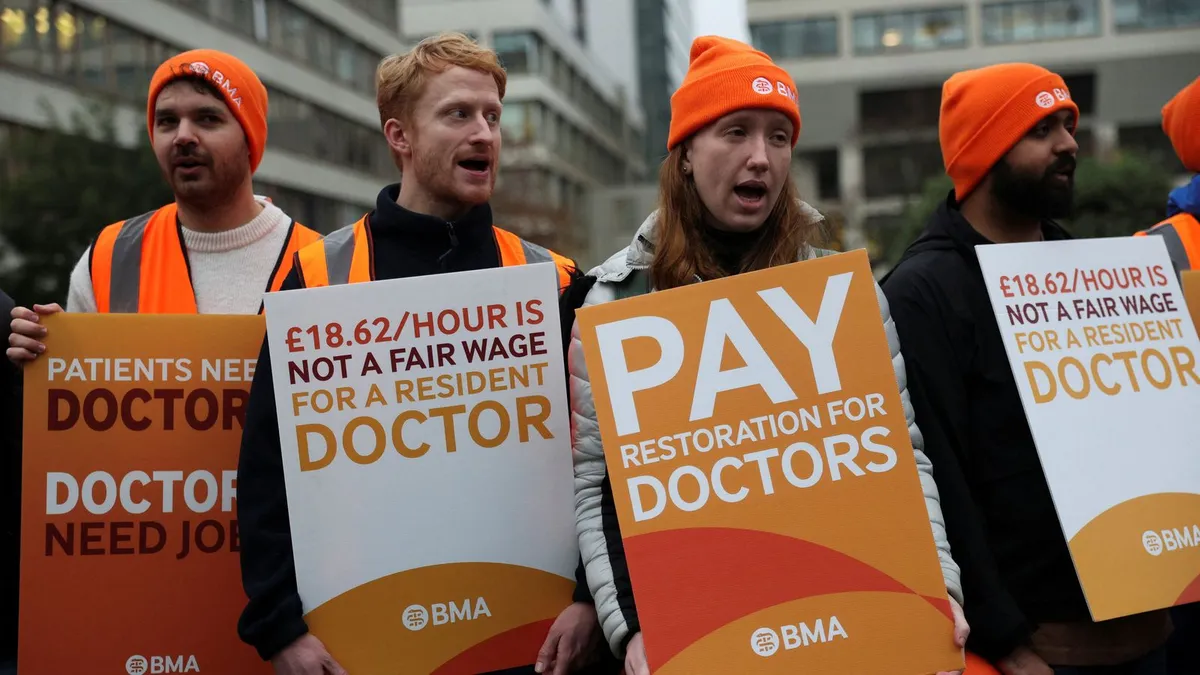
As tensions escalate in the ongoing dispute over pay and jobs, the British Medical Association (BMA) has announced a six-day strike by resident doctors in England, set to commence at 7am on April 7, 2026, just after the Easter bank holiday. This decision follows the BMA’s dismissal of the government’s latest pay offer as ‘insufficient’, highlighting the deepening frustrations among healthcare professionals.
The strike is a culmination of weeks of negotiations between the BMA and the government, which have failed to yield satisfactory results. The government proposed a pay increase that would be spread over three years, while the pay review body (DDRB) recommended a 3.5% uplift. However, these offers have not met the expectations of resident doctors, who are seeking pay restoration.
Dr Jack Fletcher, a representative of the BMA, stated, “We have made abundantly clear throughout this dispute that our aim is pay restoration, and any deal that did not move us substantially in that direction was not going to fly.” This sentiment reflects the growing discontent among doctors, many of whom are leaving the UK for better opportunities abroad due to ongoing pay issues.
The BMA has expressed a willingness to continue negotiations to prevent strikes, emphasizing the urgency of the situation. Dr Fletcher remarked, “No strikes need to happen, but Government will need to act fast to prevent them.” This call to action underscores the critical need for the government to address the concerns of resident doctors before the strike commences.
The planned strike action is significant not only for the doctors involved but also for the healthcare system in England, which is already under strain. The impact of the strike could lead to disruptions in patient care, further exacerbating the challenges faced by the National Health Service (NHS).
As the strike date approaches, the BMA’s position remains firm. They have stated, “Resident doctors have been left with no choice but to strike,” indicating that the frustration among healthcare workers has reached a tipping point.
The current state of negotiations reflects a broader issue within the UK’s healthcare system, where pay disputes have become increasingly common. The ongoing economic challenges, coupled with rising inflation, have created an environment where healthcare professionals feel undervalued and overworked.
With the strike set to begin on April 7, the coming days will be crucial for both the BMA and the government. The outcome of this dispute will not only affect the lives of resident doctors but also the quality of care provided to patients across England.
In summary, the BMA’s call for a six-day strike is a pivotal moment in the ongoing struggle for fair pay and working conditions for resident doctors in England. As negotiations continue, the stakes are high for all parties involved.