
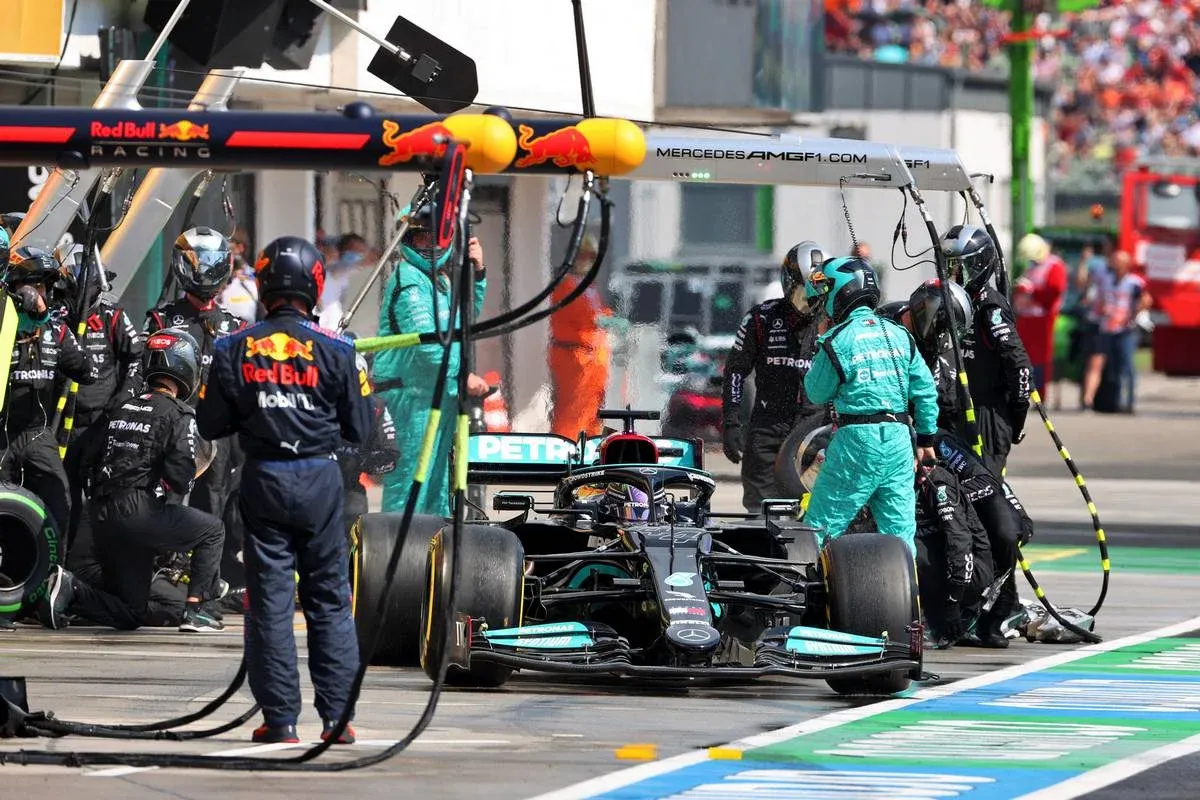
The recent developments in Formula 1 have taken a significant turn as the FIA has officially banned a qualifying trick employed by Mercedes and Red Bull. This maneuver, first spotted by rivals during the Australian Grand Prix, allowed these teams to gain a substantial speed advantage at the end of laps, raising concerns about fairness and safety.
The trick involved circumventing mandatory power reduction requirements by maintaining maximum deployment of the MGU-K for longer than permitted. This tactic provided an advantage of between 50kW to 100kW over competitors during the final sector of qualifying laps, enabling all four drivers from these teams to run at peak performance as they approached the finish line.
However, the FIA’s decision comes in light of safety concerns that emerged during the Japanese Grand Prix, where drivers experienced unexpected power losses due to the trick. Ferrari was among the teams that raised alarms regarding the implications of this practice, prompting the FIA to take action.
The governing body has now introduced a ‘continuous offset’ mode to deter the use of the MGU-K shutdown trick. Under the new regulations, if the MGU-K is shut down, it cannot be reactivated for 60 seconds, a significant drawback during races.
In a statement, the FIA clarified that MGU-K shutdowns must only be utilized for legitimate emergencies and not for systematic performance enhancement. This directive aims to ensure that all teams compete on a level playing field, maintaining the integrity of the sport.
The ban was implemented just ahead of the Miami Grand Prix, signaling a swift response from the FIA to address the loophole that Mercedes and Red Bull had exploited. The updated technical documents released by the FIA further reinforce this ban, ensuring compliance among all teams.
As the motorsport community digests this news, observers are keen to see how this will affect the performance of Mercedes and Red Bull in upcoming races. The implications of this ban could reshape strategies and outcomes in the tightly contested championship.
While the FIA has acted decisively, details remain unconfirmed regarding how teams will adapt to these new regulations and the potential impact on their performance in the Miami Grand Prix and beyond.