
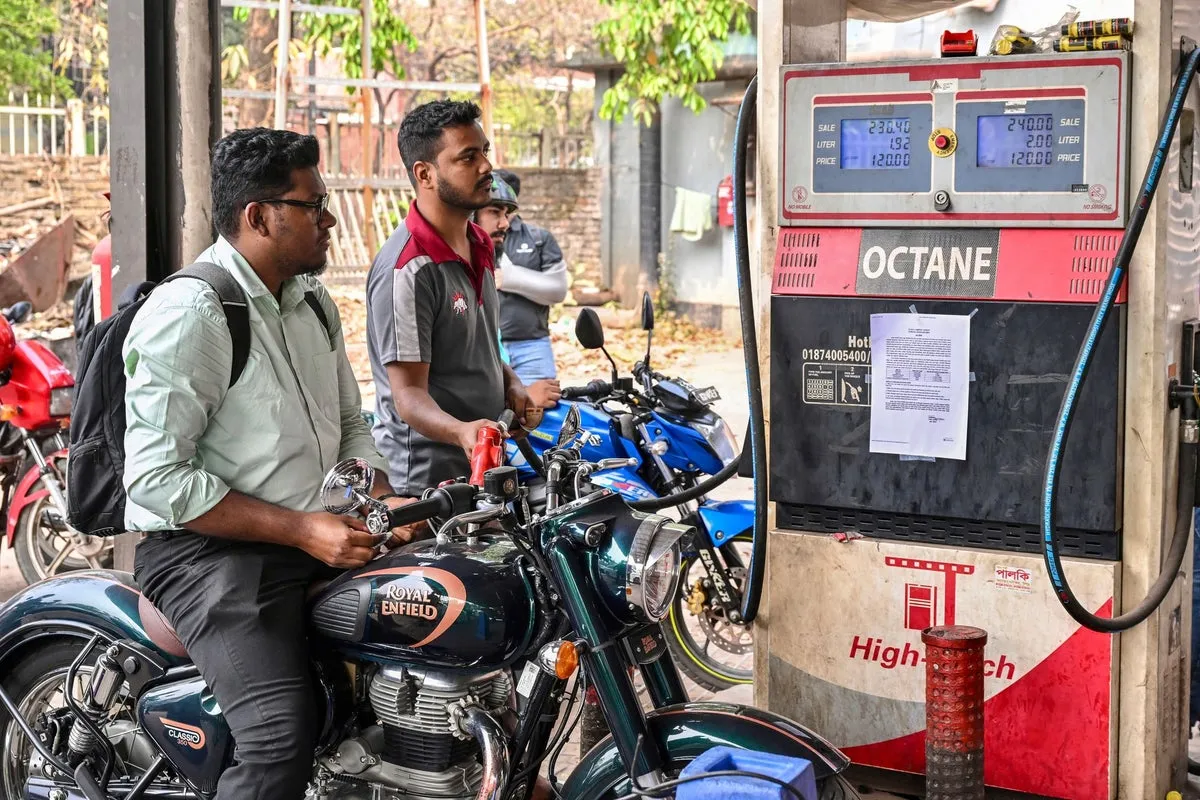
As of early April 2026, the geopolitical landscape has dramatically shifted, with fuel rationing becoming a pressing reality in both Asia and Europe. The ongoing US-Iran war has severely impacted oil supplies, leading to significant declines in reserves across several nations. Bangladesh, heavily reliant on imports for approximately 95% of its energy needs, has imposed fuel rationing for vehicles due to dwindling diesel and octane stocks.
On March 4, 2026, Bangladesh’s diesel reserves fell to a critical level of just 115,473 tonnes, enough to sustain demand for only nine days. Concurrently, octane stock dwindled to 28,152 tonnes, which could cover nearly two weeks of consumption. An unnamed official in the Rahman government expressed the dire situation, stating, “The spot buying is drying up our coffers, but the government can’t help it. We have reserves for less than 10 days.” This stark reality has led to chaos at fuel pumps, as customers face shortages and frustrations mount.
Indonesia has also joined the ranks of nations implementing fuel rationing, capping daily purchases at 50 liters per car. Slovenia became the first European country to adopt similar measures, reflecting a growing trend across the continent. The cumulative oil production losses from the US-Israel conflict against Iran reached a staggering 133 million barrels by mid-March 2026, exacerbating the crisis.
The European Union’s energy commissioner has acknowledged that fuel rations are being considered as a necessary option to manage energy demand amid these challenges. Despite the blockade at the Strait of Hormuz, which sees nearly 90% of Asia’s crude oil purchases transit, Bangladesh’s energy minister, Iqbal Hasan Mahmud Tuku, claimed, “Let me state clearly, there is no fuel shortage in Bangladesh at this moment. In fact, we have increased supply compared to last year.” This assertion stands in stark contrast to the experiences of citizens and fuel station operators.
Miznur Rahman Ratan, a joint convenor of the Bangladesh Petrol Pump Owners’ Association, described the turmoil at fuel stations, stating, “There is so much chaos at pumps, our workers are getting assaulted by the angry customers who have been forced to return without octane or petrol.” Such incidents highlight the growing frustration among the populace as they navigate the repercussions of the energy crisis.
Experts warn that if the Middle East crisis continues, companies may have no choice but to either purchase fuel at elevated prices or implement further rationing measures. Bangladesh is currently seeking over $2.5 billion in external financing to support fuel and LNG imports, underscoring the severity of the situation.
Details remain unconfirmed regarding the exact duration of the fuel crisis in Bangladesh and the long-term impact of the US-Iran war on global oil supply. As the situation evolves, the implications for energy policy and economic stability in both Asia and Europe remain uncertain.