
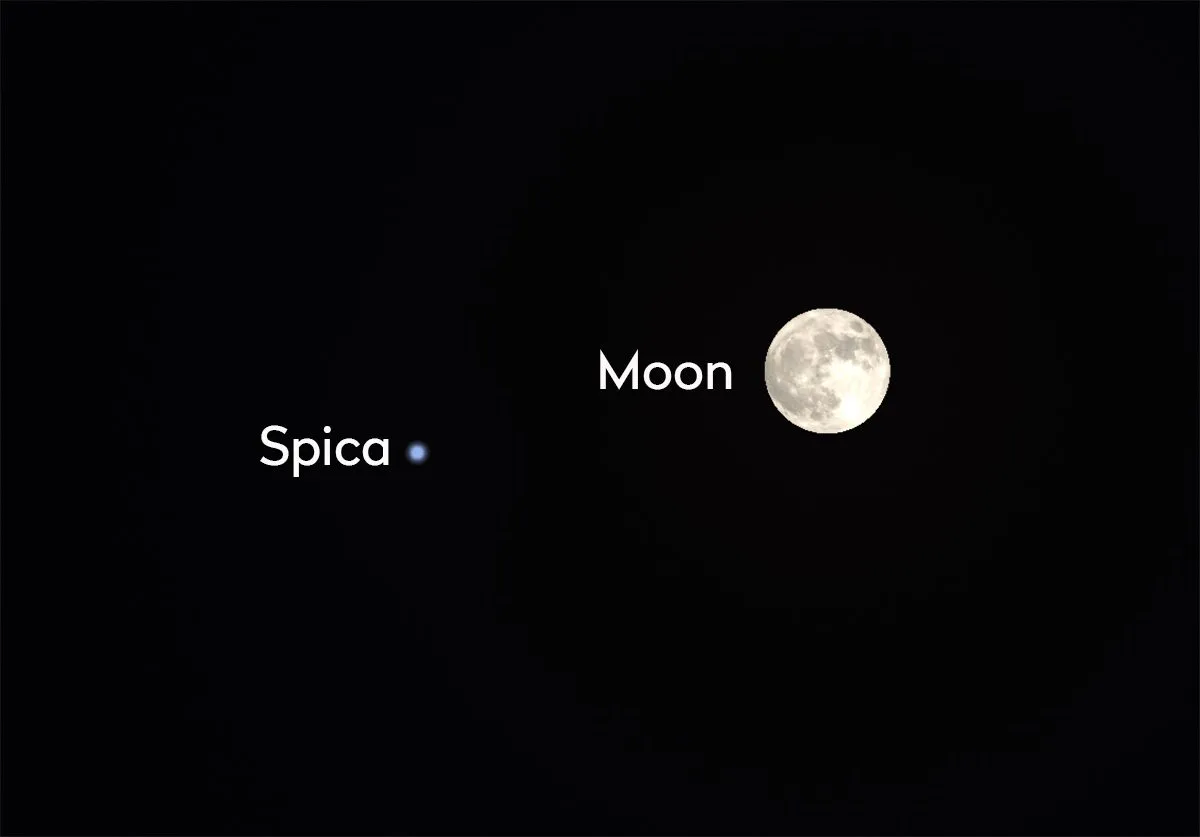
The upcoming Flower Moon on May 1, 2026, will not only rise in the southeast sky just after sunset but will also be classified as a micromoon, marking it as a distinctive celestial event this spring.
The term ‘Flower Moon’ refers to the full moon that appears in May, coinciding with the blooming of flowers during this time of year. As the moon enters the waxing stage leading up to its full appearance, it will reach its peak visibility at dusk. According to sources, this full moon will set in the southwest early in the morning hours after its ascent in the southeast.
Key characteristics:
- The Flower Moon is named for the flowers that bloom in May.
- Spica, one of spring’s brightest stars, will be visible to the left of the moon on April 29, 2026.
- This full moon occurs while the moon is at its farthest point from Earth, thus qualifying it as a micromoon.
A micromoon occurs when the moon reaches apogee—its farthest point from Earth—during either a full or new moon phase. In fact, some sources indicate that the Flower Moon on May 1 will indeed be classified as a micromoon. Notably, another micromoon is expected with the Strawberry Moon on June 29, 2026.
The average distance between Earth and the moon is approximately 238,900 miles (or 384,472 kilometers). However, during this particular full moon event on May 30-31, the moon is projected to be about 252,360 miles (or 406,135 kilometers) away from Earth. For comparison, during a new micromoon occurring later that year on December 9, it will be around 251,460 miles (or 404,687 kilometers) distant.
The implications of this unique lunar event extend beyond mere observation; for enthusiasts and astronomers alike, stargazing opportunities will abound. Notably positioned in Virgo during this period—alongside other celestial bodies such as Libra and Scorpius—the Flower Moon presents an excellent occasion for those interested in lunar phases and their visual conjunctions.