
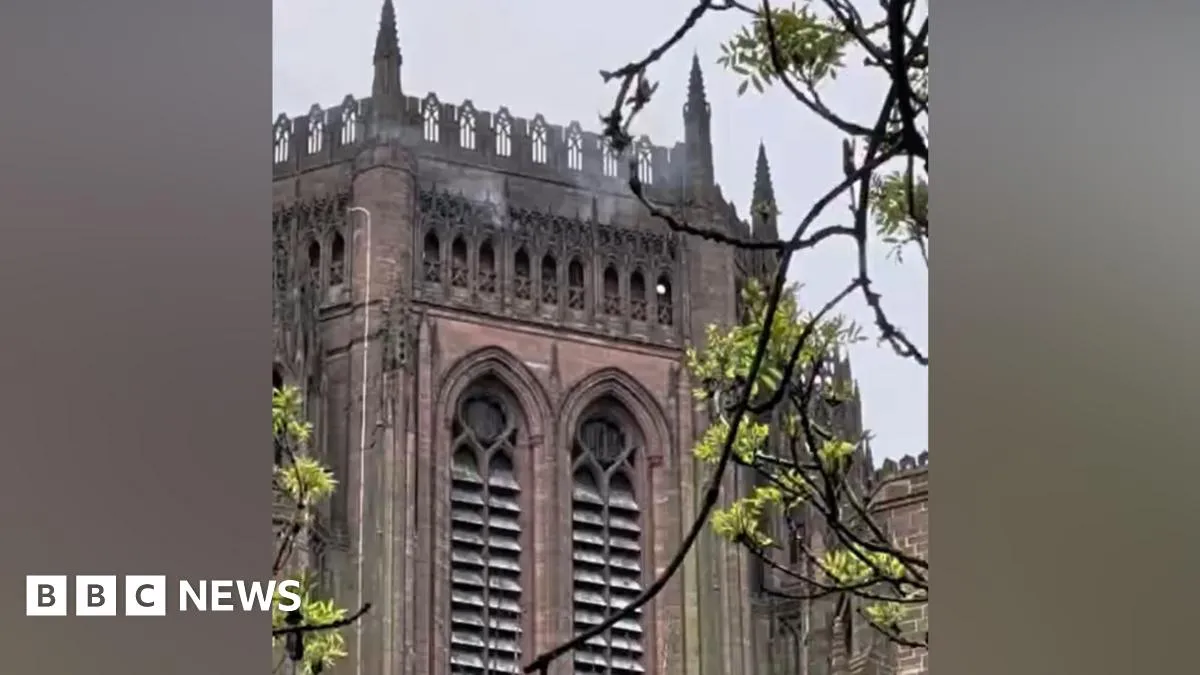
Firefighters tackled a blaze at the top of Liverpool Anglican Cathedral, prompting evacuations and warnings for residents and tourists to stay away. The fire, which broke out on the afternoon of the incident, raised immediate concerns regarding fire safety in one of Britain’s most iconic structures.
Prior to this development, Liverpool Anglican Cathedral stood as a symbol of architectural grandeur and spiritual refuge, attracting thousands of visitors each year. However, the unexpected nature of the fire introduced a stark contrast to the usual tranquility associated with this historic site.
The decisive moment occurred when emergency services were alerted at 2:44 PM, leading to a swift response from the Merseyside Fire and Rescue Service. Fire crews arrived on scene by 2:49 PM and worked diligently to contain the flames, which were finally extinguished by 15:12 BST. The cause was later determined to be electrical, raising questions about the adequacy of existing fire safety measures.
As firefighters battled the blaze, authorities evacuated the building, ensuring that no individuals remained inside during the incident. This response highlights the importance of emergency preparedness in safeguarding both public safety and cultural heritage.
The immediate effects on tourism were evident; with visitors advised to avoid the area, many planned excursions to experience the cathedral’s architecture were disrupted. The cathedral is not only the largest in Britain but also ranks as the fifth largest in the world, underscoring its significance as a tourist destination.
Statements from officials provided insight into the situation. A spokesman for Liverpool Cathedral acknowledged, “We are aware of the recent fire at our site and apologise for any concern or disruption this incident may have caused.” Additionally, a representative from Merseyside Fire and Rescue Service urged residents to “avoid the area” as investigations continued.
The incident serves as a reminder of the vulnerabilities that even well-established landmarks face. Experts in fire safety may need to reassess existing protocols in light of this event to prevent future occurrences.