
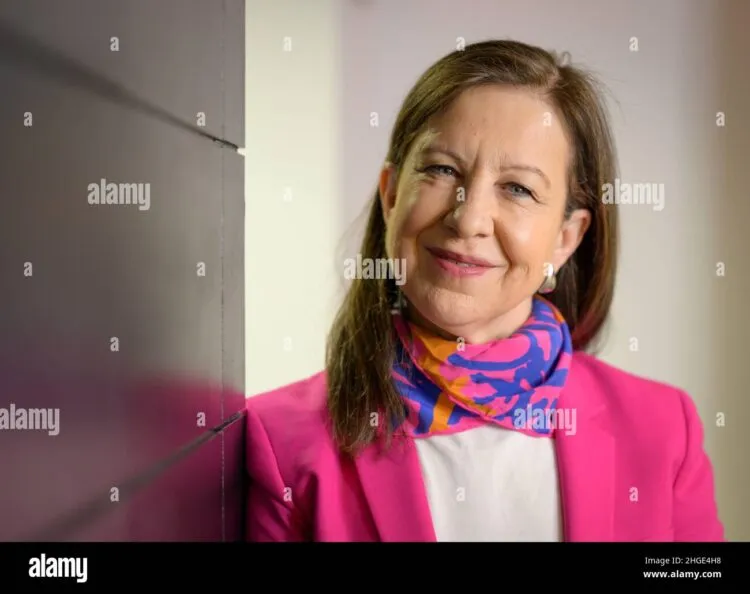
“Iran does not want a ceasefire, it will not negotiate a ceasefire, even though President Trump, according to Israeli media, is now looking for a one month ceasefire,” stated Lyse Doucet, a prominent journalist and author, as she reflects on the complexities of international conflicts. This insight comes amidst her recognition as a shortlisted author for the Women’s Prize for Nonfiction 2026.
Doucet’s book, titled The Finest Hotel in Kabul, has garnered attention for its unique approach to storytelling, tracing Afghanistan’s modern history through the lens of a single hotel. This narrative not only highlights the resilience of the Afghan people but also sheds light on the broader socio-political landscape of the region.
The Women’s Prize for Nonfiction, launched in 2024, aims to address the gender gap in nonfiction publishing, a gap that has been starkly illustrated by research showing that only 35.5% of winners across major UK nonfiction awards over the past decade were women. The prize, valued at £30,000, is a significant recognition in the literary world.
This year’s shortlist includes an impressive lineup of six authors: Arundhati Roy, Judith Mackrell, Jane Rogoyska, Ece Temelkuran, and Daisy Fancourt, alongside Doucet. Each of these authors brings a distinct voice and perspective to the table, enriching the discourse surrounding women’s contributions to nonfiction literature.
Last year’s winner, Rachel Clarke, took home the award for her book The Story of a Heart, while Naomi Klein was the inaugural recipient with her work Doppelganger. The anticipation for this year’s announcement, set for June 11, 2026, is already building within literary circles.
In recent years, there has been a notable increase in women’s representation in various literary categories. For instance, the share of women in popular science rose from 11% in 2023 to 22% in 2025. However, men still dominate categories such as business and management, where they account for a staggering 93% of published works.
Doucet’s insights into global issues, coupled with her literary achievements, position her as a significant figure in contemporary journalism and literature. Her work not only informs but also inspires dialogue about critical issues facing society today.
As the literary community awaits the announcement of the 2026 winner, the impact of the Women’s Prize for Nonfiction continues to resonate, fostering a more inclusive environment for women writers. Doucet’s nomination is a testament to the ongoing efforts to elevate women’s voices in nonfiction.
Details remain unconfirmed regarding the specific criteria that will influence the judging process this year, but the excitement surrounding the prize is palpable. The Women’s Prize for Nonfiction is not just an award; it represents a movement towards equality in the literary world.