
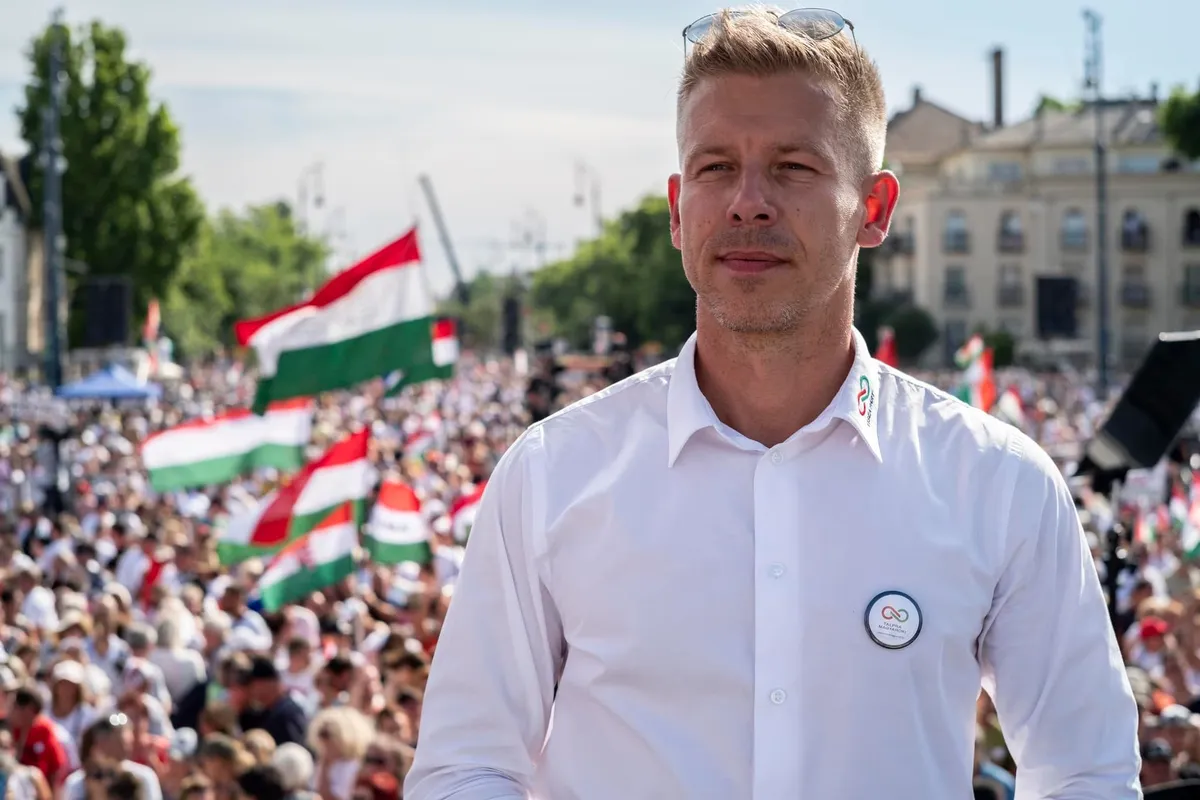
“This is a historic moment, not only for Hungary, but for European democracy,” declared Sir Keir Starmer, reflecting the monumental shift in Hungarian politics following the recent elections. Péter Magyar, leader of the Tisza party, has emerged victorious, ending Viktor Orbán’s long-standing dominance that lasted 16 years.
With the Tisza party projected to secure 135 mandates in the 199-seat parliament, Magyar’s ascent is particularly striking given his previous status as an unknown figure in Hungarian politics. The Tisza party, officially named the Party of Respect and Freedom, was founded in 2020 and has rapidly become the largest opposition party in the country.
In the lead-up to this election, Magyar’s party garnered significant public support, winning 29.6 percent of the vote in the European Parliament elections and gaining seven mandates. This momentum has evidently translated into a broader electoral victory, as the Tisza party is now predicted to receive approximately 45.7 percent of the vote in the parliamentary elections.
Magyar’s campaign was notably extensive, with the candidate visiting 500 locations across Hungary to engage with voters directly. His platform has emphasized a commitment to restoring a democratic rule-of-law state, a promise that resonates deeply in a country where concerns about governance and corruption have been prevalent.
In a significant move, Magyar has pledged zero tolerance for corruption and plans to join the European Public Prosecutor’s Office, aiming to address the issues that have plagued the Orbán administration. Furthermore, he has proposed limiting the prime minister’s term to eight years, a measure that would retroactively apply to Orbán, signaling a desire for accountability in leadership.
Magyar’s political journey has also been marked by personal connections to the previous government. His wife, Judit Varga, served as the minister of justice under Orbán before resigning amid a scandal involving government interference in a corruption case. This backdrop adds a layer of complexity to Magyar’s rise, as he has publicly described Varga’s claims against him as “propaganda” orchestrated by Orbán’s circle.
As the dust settles on this historic election, the implications for Hungary and its political landscape are profound. Magyar’s victory not only represents a shift in power but also a potential transformation in the relationship between Hungary and the European Union, especially concerning democratic principles and anti-corruption measures.
Looking ahead, the Tisza party’s plans to adopt a new media law and suspend propagandistic public-service media news programs could reshape the information landscape in Hungary. As Magyar prepares to take office, the nation watches closely, anticipating the changes that will unfold under his leadership.