
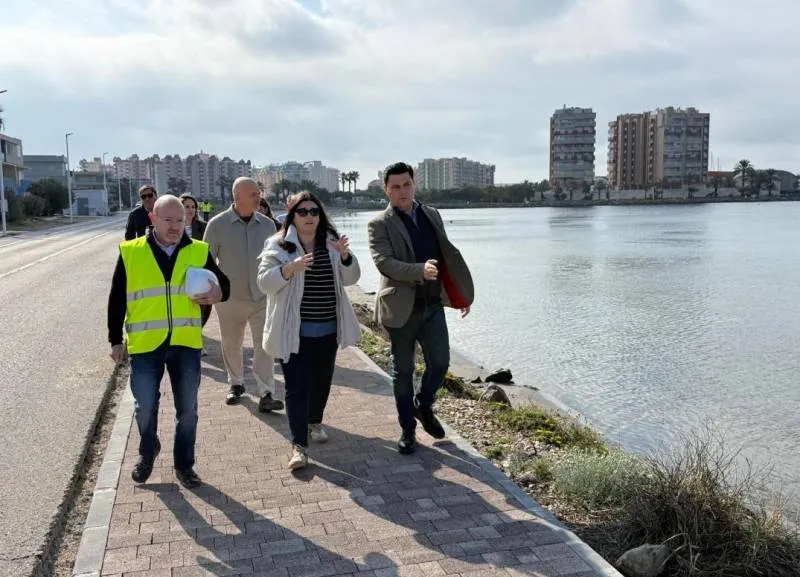
What does the future hold for Mar Menor, a unique coastal lagoon in Spain? Recent developments suggest a promising trajectory as local authorities invest in infrastructure and conservation initiatives aimed at restoring the region’s marine ecosystems.
A significant project currently underway involves the construction of a 2.1-kilometre stretch of new pavement along the Mar Menor strip, designed to create a continuous pedestrian route. This initiative, which is expected to be completed within the next month, represents an investment of €637,502.75, funded through the San Javier Destination Tourism Sustainability Plan. The new pavement will range between 2 and 2.3 metres in width, complemented by the installation of new street lighting along the entire stretch.
In addition to infrastructure improvements, the establishment of the OM2 Centre for Conservation and Recovery of Mar Menor Species marks a significant step forward in environmental management. Located in the former San Javier airport, this centre is designed to study the full life cycle of Mar Menor species under controlled conditions. The initiative aims to improve conservation protocols and increase the chances of successful reintroduction of species into their natural environment. According to President Fernando Lopez Miras, “The scientific work carried out at the centre will generate applied knowledge that can be used in real environmental management decisions.” This underscores the importance of integrating scientific research with practical conservation efforts.
The project aligns with Spain’s broader Recovery, Transformation and Resilience Plan, which is supported by the European Union’s Next Generation funding programme. This strategic investment not only aims to enhance the local tourism experience but also positions the region as a reference point for marine ecosystem restoration in southern Europe. The dual focus on tourism and conservation reflects a growing recognition of the need for sustainable development in coastal areas.
Local residents and potential investors are taking notice of these developments. Sharon, a recent property buyer in the area, expressed her enthusiasm, stating, “I’d never been there, but I researched it on social media.” She highlighted the appeal of the region, noting, “We realised that not having to do anything to the property at all was actually a big consideration.” This sentiment echoes a broader trend among buyers seeking low-maintenance properties in attractive locations.
As the Mar Menor region continues to evolve, the implications of these projects extend beyond immediate economic benefits. They also raise questions about the long-term sustainability of the local environment and the delicate balance between tourism and conservation. While the new pedestrian route and conservation centre are promising steps, the effectiveness of these initiatives will ultimately depend on ongoing commitment and collaboration among stakeholders.
Looking ahead, the success of these projects will hinge on the ability to engage the community and integrate scientific findings into practical applications. As the region strives to recover from past environmental challenges, the focus will remain on fostering a sustainable future for both residents and visitors. Details remain unconfirmed regarding the long-term impact of these initiatives, but the commitment to enhancing Mar Menor’s ecological health is clear.