
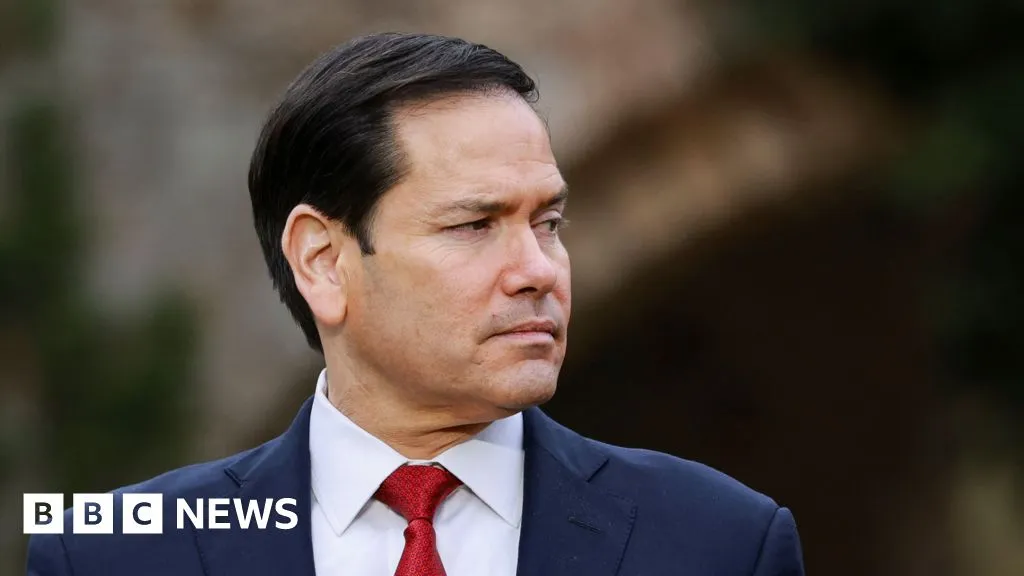
“Very little of our energy comes through the Strait of Hormuz. It’s the world that has a great interest in that, so they should step up and deal with it,” stated Marco Rubio, the U.S. Secretary of State and National Security Adviser, as he seeks to garner support for military action in Iran during a recent G7 meeting in France.
Rubio’s remarks come at a critical juncture as the ongoing Iran war has significant global economic implications, particularly with the blockade of the Strait of Hormuz, through which one-fifth of the world’s oil passes. The disruption has already led to a surge in energy prices and affected the supply of essential commodities, including fertilizers.
The G7 meeting, while aimed at discussing various global issues, has been overshadowed by the complexities of the Iran conflict. European countries have expressed a lack of interest in entering the war, complicating Rubio’s efforts to build a coalition. The OECD has predicted that global inflation could rise to 4% due to the war, further straining economies already grappling with the fallout.
As the U.S. experiences a notable decline in stock prices linked to the conflict, Rubio’s position within the Trump administration remains relatively stable, having survived 14 months with minimal criticism. His ability to navigate this contentious landscape has earned him a reputation among some as “the least crazy,” according to an unnamed Democratic senator.
Despite the challenges, Rubio’s team appears unfazed. An unnamed staffer remarked, “I had all sorts of people messaging me, like ‘Oh, you must be so busy,’ and I’m like, ‘Nope.’” This suggests a level of confidence in their strategy, even as the situation evolves.
Details remain unconfirmed regarding the exact date of the G7 meeting, and the future of U.S. policy towards Iran remains unclear. As Rubio continues to advocate for a unified response to the crisis, the stakes for both U.S. foreign policy and global economic stability are higher than ever.