
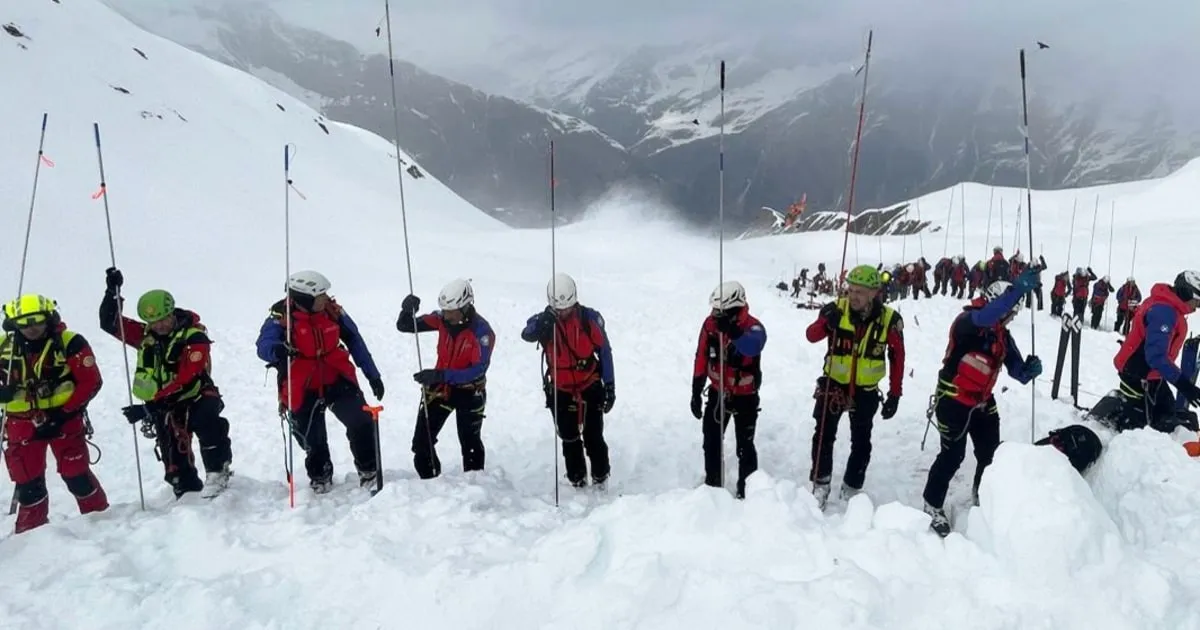
“This season has seen an unusually high number of deaths from avalanches,” stated a spokesperson from the local rescue services following a devastating incident in South Tyrol on March 21, 2026. The avalanche, which struck at an altitude of approximately 7,874 feet on the slopes of Hohe Ferse, tragically resulted in the deaths of two skiers and left five others injured.
A total of 25 skiers were caught in the avalanche, prompting a massive rescue operation that involved six helicopters and around 80 rescuers. The swift response underscores the dangers posed by avalanches, particularly during a season marked by an alarming increase in fatalities.
As of March 16, 2026, Europe has recorded 127 avalanche-related deaths this season, significantly higher than the average of 100 fatalities per season. Experts attribute this spike to an exceptionally unstable snowpack and the influx of skiing enthusiasts venturing off-piste after heavy snowstorms.
“Experts attributed the deaths to an exceptionally unstable snowpack and the rush of skiing enthusiasts to off-piste slopes after recent heavy snowstorms,” the spokesperson added, highlighting the precarious conditions that have developed in the wake of recent weather patterns.
Climate experts have linked the instability of snow to rising temperatures and stronger winds, which have contributed to the hazardous conditions in the region. The avalanche itself had a front of 150 meters and extended several hundred meters, illustrating the sheer force of nature that can be unleashed in such environments.
In light of these events, the provincial government of South Tyrol has also taken steps to address environmental concerns. Recently, regulations were amended to permit the installation of photovoltaic panels on artificial bodies of water, aligning with the objectives of the South Tyrol 2040 Climate Plan. Peter Brunner, a local official, remarked, “This is an additional option for generating electricity from photovoltaics, which aligns with the objectives of the South Tyrol 2040 Climate Plan.”
However, it is important to note that the installation of photovoltaic panels and thermal solar collectors within protected biotopes and natural monuments remains prohibited, ensuring that environmental protections are upheld even as new energy solutions are explored.
The avalanche danger in the Ridanna Valley is currently assessed as moderate, yet the recent events serve as a stark reminder of the risks associated with winter sports in the region. As the season progresses, authorities and experts continue to monitor conditions closely, urging skiers to remain vigilant.
Details remain unconfirmed regarding any further developments in the aftermath of this tragic incident, but the focus remains on ensuring safety and preventing future occurrences.