
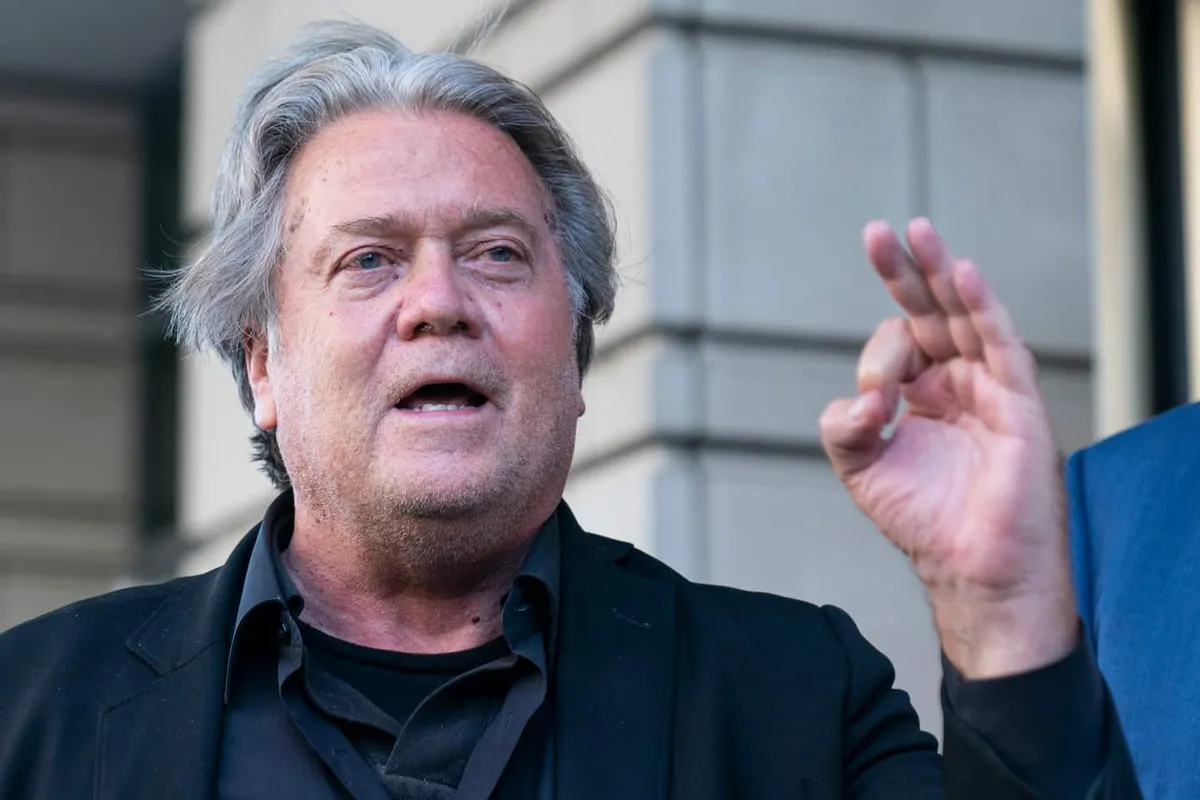
In 2022, Steve Bannon, a prominent rightwing media host and ally of Donald Trump, was convicted of two misdemeanor counts of contempt of Congress. This conviction stemmed from his refusal to comply with a subpoena to testify before the US House of Representatives committee investigating the January 6 insurrection. Bannon’s defiance of the subpoena marked a significant moment in the ongoing legal and political battles surrounding the events of that day.
Following his conviction, Bannon served four months in prison in 2024 and was fined $6,500. His legal team argued that the courts misinterpreted the term “willfully” in the context of his non-compliance, claiming it should not equate to “intentionally” ignoring the subpoena. Bannon maintained that he was acting on the advice of his attorneys, who invoked claims of executive privilege provided by Trump.
In a notable turn of events, the US Supreme Court vacated a lower court ruling that had upheld Bannon’s conviction, leading to renewed discussions about the implications of his case. The Trump administration subsequently sought to dismiss Bannon’s conviction, asserting that doing so would serve the interests of justice. “The government has determined in its prosecutorial discretion that dismissal of this criminal case is in the interests of justice,” stated representatives from the Trump administration.
As Bannon’s legal saga unfolded, he also faced additional challenges. He pleaded guilty to fraud charges in New York state court related to a campaign aimed at financing and building a border wall. However, he was pardoned by Trump for federal fraud charges, which added another layer of complexity to his legal situation.
As of now, Bannon’s future remains uncertain. His attorneys continue to argue that his conviction should be dismissed, citing fundamental separation of powers principles as essential to the constitutional framework. Michael Buschbacher, a representative for Bannon, expressed satisfaction with the Supreme Court’s decision, stating, “This case should never have been brought, and we’re delighted that the decision affirming Mr. Bannon’s unlawful conviction has finally been vacated.”
Throughout this ordeal, Bannon has remained a significant voice in the ‘Make America Great Again’ movement, leveraging his platform through the War Room podcast. His influence persists even as he navigates the complexities of his legal challenges, which resonate deeply within the political landscape of the United States.
The sequence of events surrounding Bannon’s legal battles is crucial not only for him but also for the broader implications it holds for political accountability and the rule of law in America. As the situation develops, observers will be keenly watching how these legal proceedings unfold and what they mean for the future of political discourse in the country.