
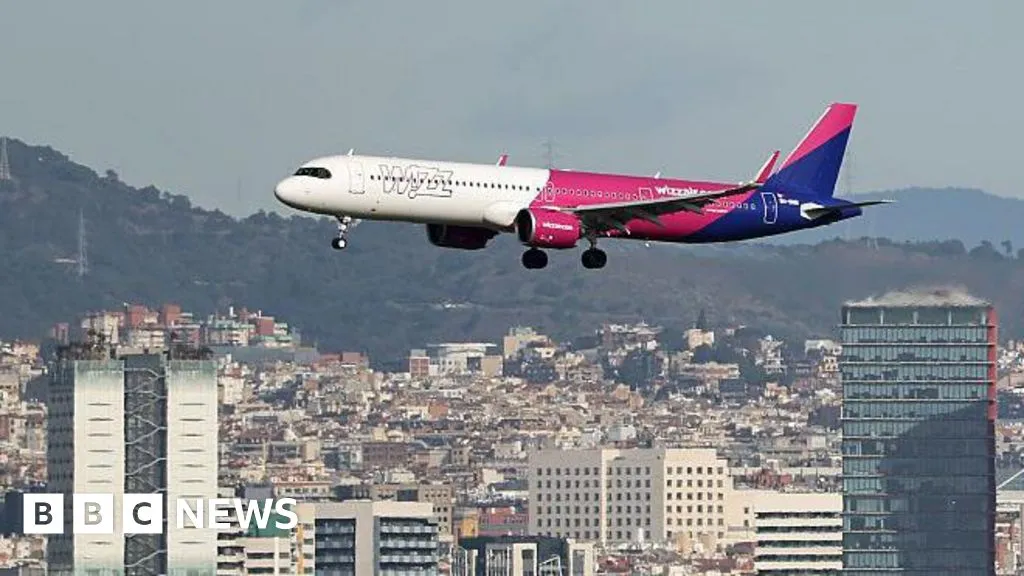
Wizz Air’s CEO, József Váradi, has categorically dismissed recent bankruptcy claims made by Ryanair’s chief executive, Michael O’Leary, asserting that the airline is well-positioned to navigate rising fuel prices due to its effective fuel hedging strategies. As the ongoing conflict in Iran continues to disrupt oil supply chains—thereby inflating jet fuel prices—Wizz Air maintains a cautious yet optimistic outlook.
According to documents, Wizz Air has hedged 70% of its fuel requirements for the summer season, allowing it to secure a significantly lower cost of $700 per metric ton of jet fuel compared to the market price of approximately $1,700 at the time of Váradi’s remarks in March 2026. This strategic approach positions Wizz Air favorably within a volatile market where many European airlines face increased operational costs.
Váradi stated that Wizz Air does not anticipate running out of jet fuel and expressed confidence in the carrier’s operational stability. In light of these assertions, he remarked, “Jet fuel traders will find alternative solutions, other sources. I don’t see disaster coming.” Such statements reflect an awareness of the broader challenges within the airline industry, particularly as O’Leary suggested that if oil prices remain high, two or three European airlines—including Wizz Air—could potentially face bankruptcy.
In contrast to Ryanair’s strategy, which reportedly includes hedging around 80% of its fuel needs at $67 per barrel through March 2027, Wizz Air’s approach appears to provide a buffer against price fluctuations. Furthermore, Wizz Air’s Chief Commercial Officer (CCO), Ian Malin, has indicated that the carrier has hedged 86%, 71%, and 61% of its fuel needs across quarters one through three of 2026 respectively.
The company also boasts a liquidity ratio higher than Ryanair’s, with approximately €2 billion in cash reserves. This financial cushion may serve as a critical advantage as Wizz Air plans for a summer schedule projected to be 17% larger than last year’s offering.
No timeline has been shared regarding how long current oil market conditions might persist or how they will specifically impact airline operations moving forward. Analysts suggest that while Wizz Air currently shows resilience through its strategic planning and strong financial positioning, uncertainties surrounding global oil supply could still pose risks for all players in the airline industry.