
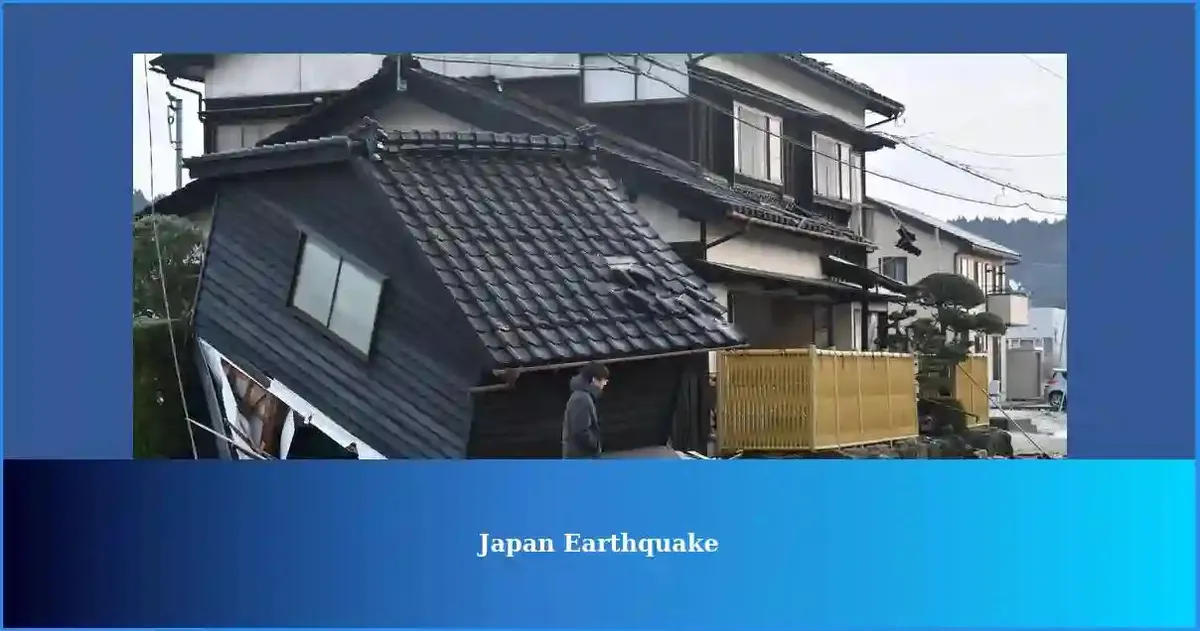
A tsunami warning was issued across part of Japan’s east coast following a powerful earthquake that registered a magnitude of 7.7. This seismic event, which occurred on April 20, 2026, at 4:53 PM local time (7:53 AM GMT), has led to the evacuation of over 156,000 people across five prefectures. While the initial forecast suggested waves could reach between one and three meters in height, the warning was later downgraded to advisories as the situation unfolded.
The epicenter of the quake was located off the northeastern coast of Japan’s Sanriku—a region historically vulnerable to seismic activity—highlighting Japan’s precarious position within the ‘Ring of Fire.’ This geographical reality contributes to the country experiencing approximately 1,500 earthquakes each year, with about 20 percent of the world’s earthquakes recorded at a magnitude of six or higher occurring in this area.
Despite the potential for disaster, reports indicate that no casualties or major damage occurred as a result of this earthquake. However, around 100 homes were left without power, underscoring the impact on local infrastructure. The International Atomic Energy Agency has also confirmed that there were no abnormalities detected at Japan’s nuclear facilities post-quake.
In response to the earthquake, Japan’s government established an emergency taskforce aimed at coordinating relief efforts and ensuring public safety. Officials have urged residents in affected areas to take immediate anti-disaster measures—”Please take anti-disaster steps, while embracing the idea that one must protect one’s own life,” stated a government official.
Warnings from the Japan Meteorological Agency emphasized the need for evacuations from coastal regions and riverside areas. They advised citizens to seek higher ground or designated evacuation buildings—”Tsunami waves are expected to hit repeatedly. Do not leave safe ground until the warning is lifted,” they cautioned.
This incident inevitably evokes memories of the devastating 2011 Tohoku earthquake and tsunami, which claimed approximately 18,000 lives and caused catastrophic damage including a meltdown at the Fukushima nuclear plant. Such historical context serves as a reminder of the potential consequences associated with seismic events in this seismically active region.
While no further significant developments have been reported since the initial warning was downgraded, experts continue to monitor aftershocks closely. The probability of a larger earthquake occurring after this recent event is estimated at just one percent according to preliminary assessments.
As Japan navigates this latest threat from nature, communities remain vigilant and prepared for any further actions required in light of ongoing seismic activity in their vicinity.