
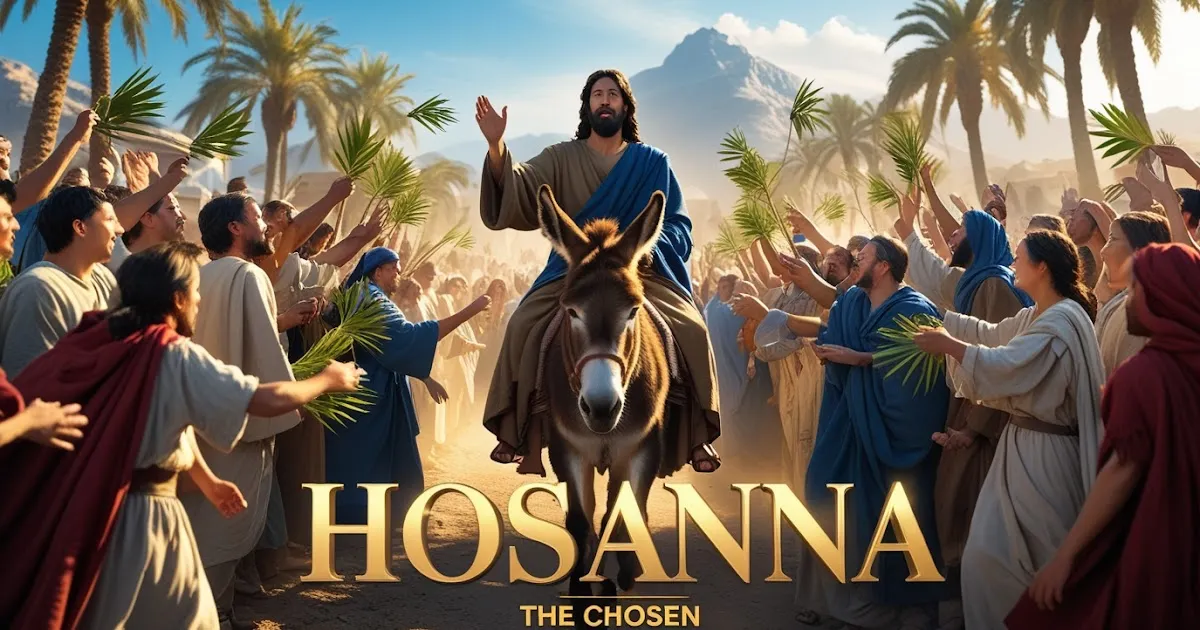
Palm Sunday, occurring on March 29, 2026, marks the beginning of Holy Week in the Christian calendar. This significant day commemorates the moment when Jesus Christ entered Jerusalem, an event celebrated by Christians worldwide. As Jesus rode into the city, the crowds welcomed him by waving palm branches and laying them along his path, a gesture symbolizing honor and reverence.
The entry of Jesus into Jerusalem is not merely a historical event; it is rich with theological implications. Jesus rode a donkey, fulfilling the Old Testament prophecy from Zechariah 9:9, which foretold the coming of a humble king. This act was a profound statement about the nature of his kingship, contrasting the expectations of a conquering hero with that of a peaceful Messiah. The crowds, in their excitement, shouted, “Hosanna to the Son of David! Blessed is he who comes in the name of the Lord!” This public acclamation serves as a moment of recognition for Jesus as the King, albeit one who comes in humility.
Key moments
The liturgical observance of Palm Sunday includes a procession where congregants wave blessed palms, a tradition that has been maintained for centuries. However, the day is not solely about celebration; it also invites reflection on the nature of Jesus’ kingship. As noted by theologians, “Palm Sunday reveals a painful mystery: God does not save us from a distance but rather from the inside of the human reality of brokenness.” This perspective encourages believers to contemplate the depth of Jesus’ mission and the suffering that awaited him in the days to come.
As the events of Holy Week unfold, Palm Sunday serves as a poignant reminder of the duality of Jesus’ identity. He is both the King who comes in humility and the one who will face immense suffering. The journey from this joyous entry to the crucifixion is a stark contrast that underscores the Christian narrative of redemption. Jesus entered Jerusalem knowing the trials ahead, which adds a layer of gravity to the celebrations of Palm Sunday.
In the context of the Christian faith, Palm Sunday is not just a historical event; it is a call to action. It invites believers to lay down more than palm branches; it challenges them to lay down their pride, self-will, sin, and divided hearts. This introspective aspect of the celebration encourages a deeper engagement with one’s faith as Christians prepare for the solemnity of Maundy Thursday on April 2, 2026, and the joy of Easter Sunday on April 5, 2026.
As Palm Sunday approaches in 2026, congregations around the world will prepare for this sacred observance. The anticipation builds not only for the celebration but also for the reflective journey that follows. The significance of this day resonates deeply within the Christian community, serving as a reminder of the complexities of faith, the nature of Jesus’ kingship, and the path to redemption.
In summary, Palm Sunday encapsulates a moment of public recognition for Jesus as King, while also foreshadowing the suffering he would endure. It is a day that invites both celebration and contemplation, urging believers to reflect on their own lives in light of Jesus’ example. As the faithful gather to commemorate this event, the echoes of the past resonate with contemporary significance, reminding all of the profound mystery of faith and the journey that lies ahead.