
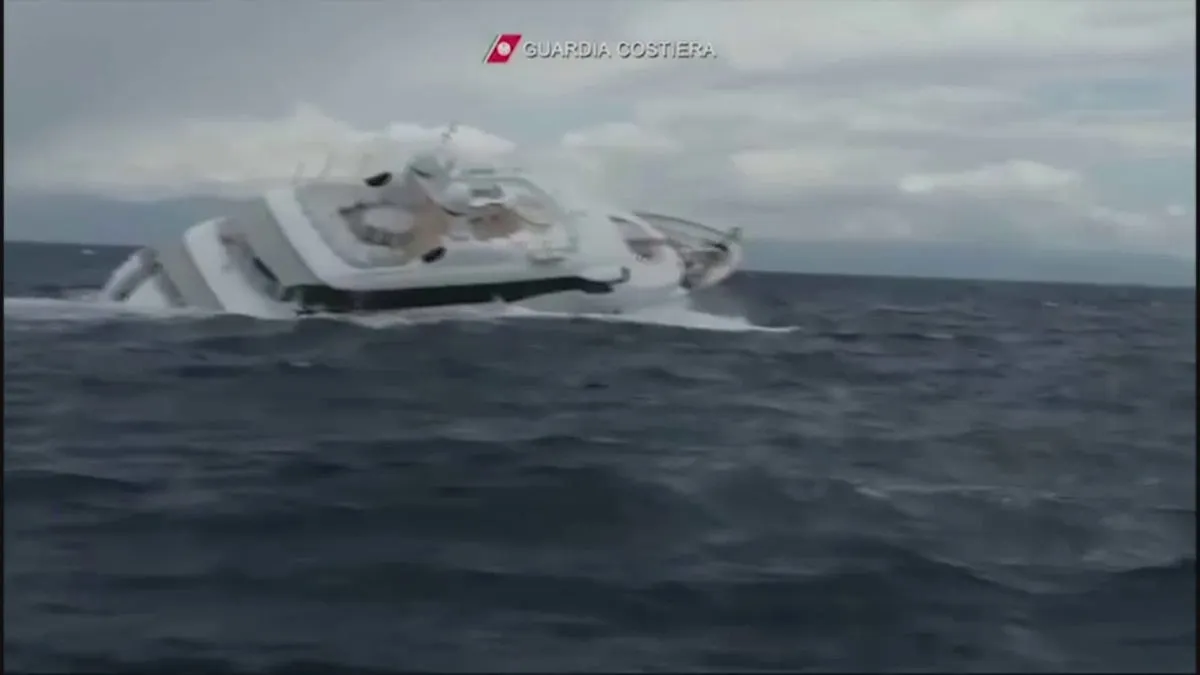
On August 19, 2024, the Bayesian superyacht sank off the coast of Sicily, resulting in the tragic deaths of seven people, including its owner Mike Lynch and his daughter. Initially, many speculated that severe weather conditions had contributed to the disaster; however, subsequent investigations have uncovered evidence suggesting that crew errors were primarily responsible for the sinking.
The events unfolded as the yacht, measuring 56 meters (or 184 feet), was carrying 22 people at the time of its demise. On that fateful day, wind speeds reached a recorded maximum of 63.4 knots (approximately 73 mph) on the yacht’s beam. This intense wind caused the vessel to drag its anchor and heel over more than 90 degrees to starboard before ultimately capsizing.
Investigators have since determined that improper actions by the crew—including a failure to activate necessary safety devices—significantly contributed to the tragedy. The investigation revealed that what was initially perceived as a storm amounted to little more than a squall. In fact, Giovanni Costantino, a representative from the yacht’s manufacturer, stated that it had been labeled ‘unsinkable’, attributing fault instead to the crew for leaving doors open during adverse weather.
The investigation into this marine accident has led Italian prosecutors to explore potential charges against the yacht’s captain and crew for negligent shipwreck and multiple counts of manslaughter. This legal scrutiny underscores serious implications for those involved, particularly given that some families are seeking accountability for their loved ones’ deaths.
The recovery efforts for the Bayesian superyacht took nearly ten months, culminating in its retrieval from beneath the waves for forensic examinations. These examinations aim to clarify further details surrounding the incident and provide insights into safety practices within luxury yachting.
This situation raises critical questions about superyacht safety standards and crew training protocols. As investigations continue, it remains essential for stakeholders in the marine industry to reflect on these findings and consider necessary reforms to prevent future tragedies.